Episode 206: Scams, Scams, and more! Data Protection and Staying Safe as an Author
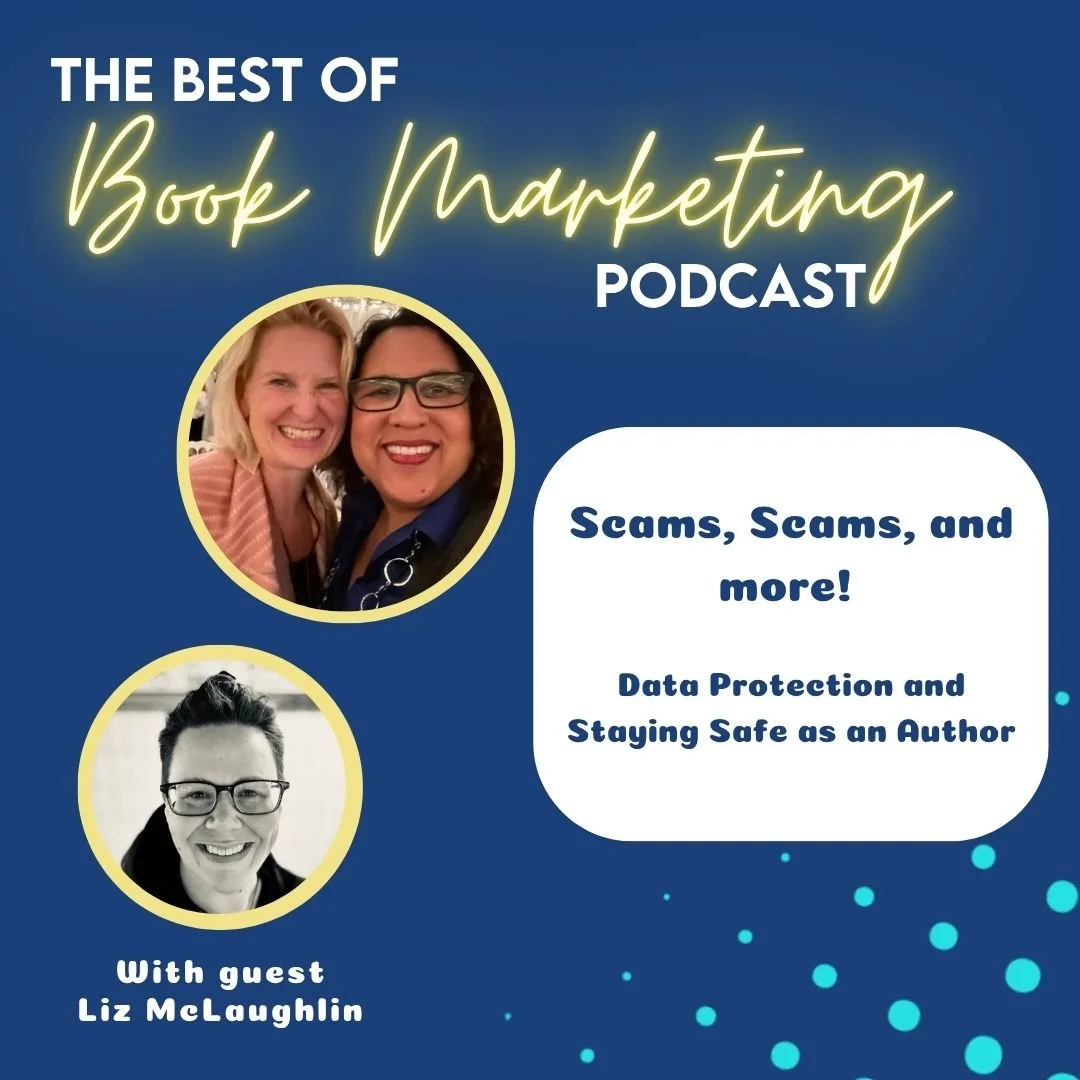


As writers, we are often targeted by scams - from fake publishing services to phishing attempts to fraudulent marketing opportunities.
In this episode, we invite Liz McLaughlin to help us learn how to recognize and avoid the scams. Plus, in a world of technology meltdowns (viruses, getting water on your laptop anyone like Lainey!), we talk about how to keep copies of our work safe.
Liz has spent years supporting people through moments of stress, vulnerability, and uncertainty working as an information technology professional. With a background in psychology and social work, she brings a grounded, compassionate understanding of how emotions influence decision-making—and how scammers expertly exploit those moments.
About Liz McLaughlin
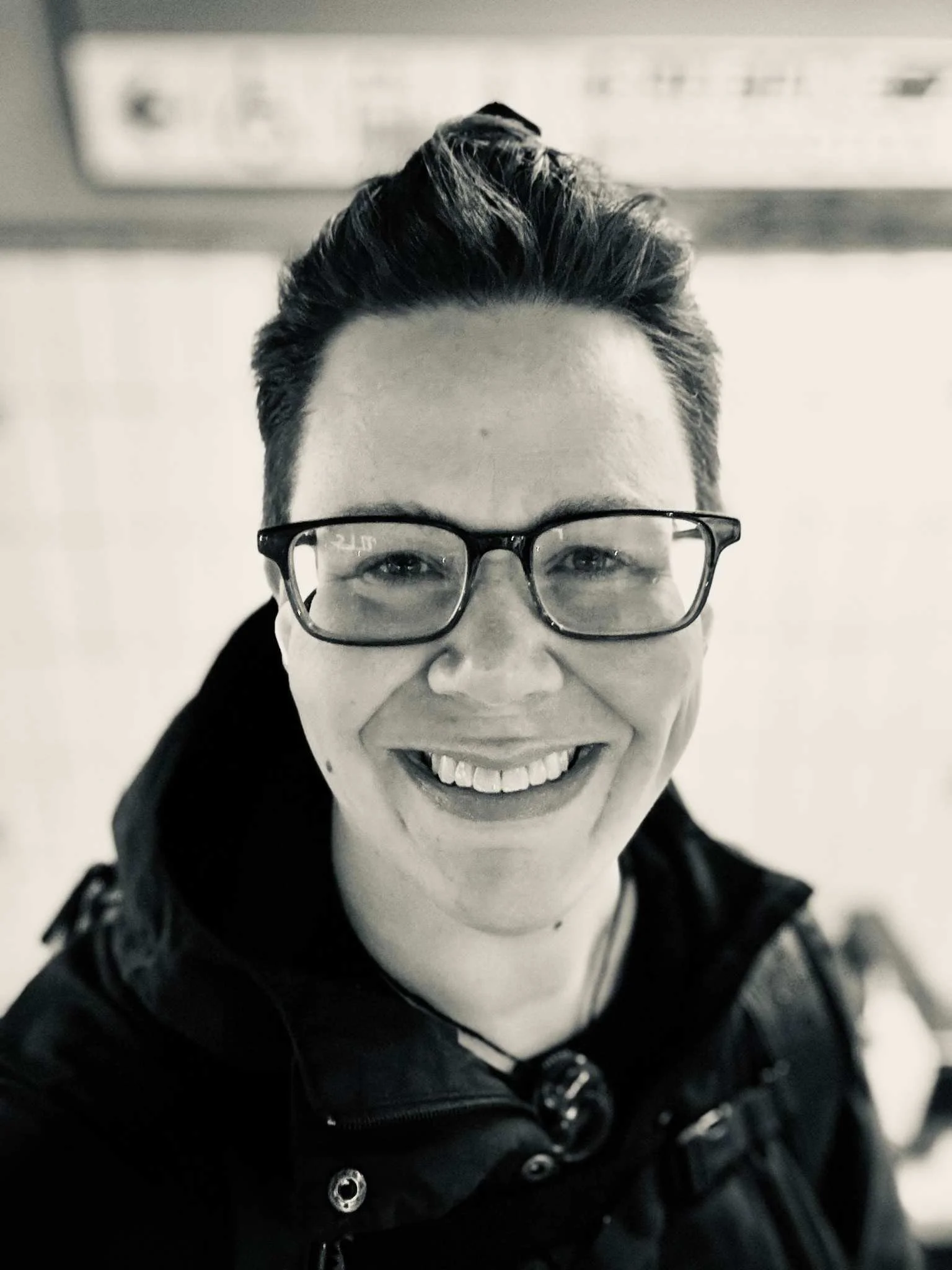
Liz McLaughlin has spent years supporting people through moments of stress, vulnerability, and uncertainty working as an information technology professional. With a background in psychology and social work, she brings a grounded, compassionate understanding of how emotions influence decision-making—and how scammers expertly exploit those moments.
Rather than focusing on fear or shame, Liz will empower listeners with clear, practical, actionable skills they can use right away. She'll break down the human side of scams—why they work, what they target in us, and how simple mindset shifts can create powerful protection. Her mission is simple: help people feel capable, informed, and never alone in the fight against fraud.
Connect with Liz
Episode Resources
Writer Beware by Victoria Strauss - a great place to check out potential vendors and understand the latest scams
New Wave of Nigerian “Marketing” scams (Writer Beware)
Online backup services mentioned: Backblaze, Carbonite
1Password Password Manager or Apple iCloud Keychain
Weekly Writer Support Group (co-hosted by Lainey with author Charlotte Dune, all genres welcome)
Author Nation conference - online access coming soon and next conference in November 2026
Books Mentioned
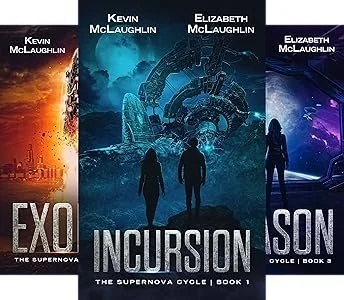
The Supernova Cycle by by Elizabeth McLaughlin & Kevin McLaughlin (Author)
A nearby supernova...and an impending first contact...will change humanity forever.
A spellbinding sci-fi thriller about two people's desperate struggle to save humanity from extinction.
Love Only Better by Paulette Stout (new cover coming soon!)
Where Kindness Lives anthology (including work by Paulette and a range of women’s fiction authors)
Full Disclosure: We are part of the Amazon affiliate program, which means Lainey earns a tiny commission (maybe enough for a coffee) if you buy something after clicking through from a link on this website.
Episode Sponsor
12 Weeks to Book Launch Success -Join Lainey’s program to help you successfully launch your book. Next group starts in March 2026!
Full Program info
In the 12 Weeks to Book Launch Success mastermind program, Lainey works one on one with a group of authors and help you create a plan to successfully launch your book.
Does this Sound Like You?
✓ Excited about your book launch
✓ Overwhelmed by where to start with marketing?
✓ Confused about timing—what needs to happen when?
✓ Unsure which tactics are worth your precious time and money?
✓ Terrified you'll miss something critical and blow your chance at launch success?
You're not alone. Many authors get terrible advice, and waste thousands on ineffective tactics.
What If You Could Launch With Confidence?
Imagine how it would feel to…
✓ Know with certainty you've built the best possible launch plan for YOUR book
✓ Avoid wasting money on shiny tactics that don't sell books
✓ Have a proven framework covering awareness, credibility, and reasons to buy
✓ Build your plan alongside other smart, supportive authors
✓ Launch successfully without depending solely on social media
✓ Start your author career with momentum and confidence
This isn't just possible—it's exactly what I’m proud to see my students achieve.
Building a successful book launch is possible as a new author—even without a massive social media following.
Program info
Scholarship Opportunity (for writers from any group traditionally under-represented in publishing)
Join the wait list for next time!
Note: next sections are mostly created by AI for your convenience - so please forgive any typos or inaccuracies!
Summary
Lainey Cameron and Paulette Stout discuss the prevalence of scams targeting authors, emphasizing the importance of data security. Lainey shares her experience at Author Nation, where her laptop was damaged by water, highlighting the value of Apple Care. Liz McLaughlin, an IT professional and author, explains common scams like phishing and spear phishing, urging authors to use password managers and two-factor authentication. They stress the importance of regular backups, both local and cloud-based, and recommend using services like Backblaze or Carbonite. Liz also advises authors to audit their security practices and prioritize self-care to avoid falling victim to scams.
Introduction
Liz McLaughlin introduces herself, mentioning her role as a tier three technician at Harvard University and her experience as an author.
Liz explains why scams are prevalent, noting that they work because they exploit human behavior and vulnerabilities.
Liz shares her personal experience with a fraudulent check scam and the importance of recognizing the signs of a scam.
The discussion highlights the psychological aspects of scams, particularly the urgency and fear tactics used to manipulate victims.
Types of Scams Targeting Authors
Liz and Lainey discuss the various types of scams targeting authors, including phishing, spear phishing, smishing, and vishing.
Liz explains how scammers use AI to impersonate reviewers or book club leaders and the prevalence of PayPal and Venmo scams.
Lainey shares examples of scams she has encountered, such as fake publishing companies and marketing services from Nigeria.
The conversation emphasizes the importance of being skeptical and verifying the legitimacy of any unsolicited offers.
Practical Advice for Avoiding Scams
Liz advises taking a deep breath and assessing the situation calmly when suspecting a scam.
She recommends changing passwords for critical accounts and making a list of actions to take in case of a breach.
Liz explains the importance of two-factor authentication and the use of password managers like One Password and iCloud Keychain.
The discussion includes tips for managing passwords and the benefits of using cloud storage for backups.
Backup Strategies and Online Security
Lainey shares her experience with using an online backup service, Carbonite, and the importance of having multiple backup solutions.
Liz emphasizes the need for backups in two or more places, including cloud storage and hard drive backups.
The conversation covers the importance of regularly testing backup systems to ensure they are functional.
Liz and Lainey discuss the limitations of Microsoft OneDrive as a backup solution and the need for manual checks.
Mindset and Habits for Cybersecurity
Liz advises authors to view cybersecurity as a habit and to take small, manageable steps to improve their security practices.
She encourages authors to treat their writing business as a priority and to invest in cybersecurity measures.
Paulette suggests being skeptical of unsolicited offers and assuming they are fraudulent until proven otherwise.
The discussion highlights the importance of self-care and staying informed about cybersecurity threats.
Final Thoughts and Recommendations
Liz recommends conducting a security audit to assess current practices and identify areas for improvement.
Paulette advises authors to be cautious and skeptical, especially when dealing with unsolicited offers.
Lainey emphasizes the importance of having multiple backup solutions and regularly testing them.
The conversation concludes with a focus on the importance of self-care and staying informed about cybersecurity threats.
Transcript
Lainey Cameron 0:12
Hi. This is Lainey Cameron.
Paulette Stout 0:15
I'm Paulette Stout,
Lainey Cameron 0:17
And this is an episode that Paulette and I have actually been talking about doing for, I don't know, Pilate, like a year, we've been saying we need to do an episode on scams. And it got a little, yeah, it got a little precipitated, because two things happened while I was at author nation two weeks ago. One, I will share in more detail exactly how it happened. But my laptop got dosed in water. And I mean, dosed. And so yes, it died. It had to go back to Apple. Bad news. Okay.
Lainey Cameron 0:45
But also, I got to watch a presentation by Liz McLaughlin, who was talking about data security, how to avoid getting scammed. And it was a phenomenal presentation. And I ran up to her at the end of the session and said, Will you come on the podcast? Because we've been wanting to talk about this topic, and you know your stuff inside and out, and we love getting experts who know more than us, even though we are experiencing scams up the wazoo. Like most authors being targeted at us, I've actually had someone that someone let me know was impersonating me. So what we'll talk more about all of that. Yeah, it's it's scary stuff, and it's actually kind of funny when you dig under it too.
Lainey Cameron 1:19
But the point is, as writers, we are being targeted by scams, left, right and center, and part of it is like, writing is such an emotional thing, right? Like we're so attached to our work, and when someone comes to us and says, like, I can make it work for you, and I can get you name the dream that you wanted, of course we want to listen. Of course we want it to be true, right? We want to believe these things, and that's how we end up getting scammed. And even the best of us, the smartest people out there, get scammed. And so we kind of feel like this is something we can help you understand the scams a little bit more. So Liz is going to help us learn. Like, how do you recognize the signs of a scam? How do you avoid them? We're going to talk about, what are the common ones that we're seeing out there right now? How to kind of recognize them?
Lainey Cameron 2:00
Liz has so much experience, and she's coming from kind of an IT background as well, so she's got lots of thoughts on security and how do we keep our information secure, which you know in writer world means, how do you make sure you don't lose your manuscript? But also, how do you make sure you don't lose access to your social media, for example, which is a very easy thing to have happen. I have writer friends who had 10,000 followers on Instagram and lost access to their accounts, and they're never getting them back.
Paulette Stout 2:22
I'm knocking on wood on that one.
Lainey Cameron 2:22
It's scary stuff.
Paulette Stout 2:22
There's gonna be a lot of knocking on wood during this episode.
Lainey Cameron 2:23
The main thing I wanna say as we kick off here is our goal is not to scare the bejesus out of you and make you never want to touch the internet again. Our goal, and this is Liz's goal, when she talks about this, is to give you the confidence to recognize so that you can move forward and do all your wonderful creative work and not live in fear and just know when to kind of have that spidey sense go off. So that's our goal. We're super excited about this episode. Liz, is going to be phenomenal. You're really lucky that you're here to hear this, and let's just kick it off by doing a little bit of personal updates. Paulette, I know there's been some cover stuff going on, because you and I have been going back and forth. What's going on?
Paulette Stout 3:04
Y'all, I hope you have a Lainey in your life, because she's just the best, just so you know, she's just been really phenomenal as a friend and as an author, you know, fellow author, and lots of stuff going on my life lately, my mom passed away, and Lainey just really, just been this amazing sports business. I just really wanted to, kind of like, show you some mad love at the very top, Lainey,
Paulette Stout 3:26
So yes, we're just today, got the final cover of the re-covering of my debut. Love Only Better. For those who aren't aware, my book is kind of straddles women's fiction and romance, and I was kind of like positioned it from a marketing perspective, as more as women's fiction, with like the covers and like the flowers and all the things like that. So but everyone's like, this is romance, so redoing the covers. The new cover is like, super sexy, very awesome, very exciting, very arresting. And I'm really happy with it. Damonza, y'all - go watch that episode. So that's great.
Paulette Stout 4:00
Another exciting thing is that you've had this nine author anthology was launched a couple weeks ago. It's called Where Kindness Lives, and I think we all need a little bit of kindness this time of year in general. So if you're interested in some really nine short stories, all other things of kindness, I encourage you to check that out and support the authors who are doing that work. And also I'm just started writing my next book a little bit. I believe I'm going to have it be like a Soviet romance. So working on all those things, trying to get really inspired again. And Lainey let us know what's going on in your world.
Lainey Cameron 4:38
There's always lots. Well, I am in San Francisco right now for Thanksgiving. I'm here for a couple of weeks seeing friends and family, which is really fun. I do not yet have my laptop back. I'll tell you the story of what happened to author nation. I was at a session, and I got really excited, and I got distracted, and I took my water bottle and I put it away, and I got to the end of the session, I picked up my laptop. And I walked to the bathroom, and I realized there was water pouring down my leg from my laptop bag, and the water bottle was open at the top, and the entire bottom of the laptop bag was full of water, and all the ports of one side of the laptop were in the water. And I, you know, you know, obviously, took it out, tried to dry it out, turned it upside down, didn't dare turn it on. Took it on, took it to the Apple store that afternoon. Thank goodness there's an Apple store right there in Las Vegas, and the guy took one lick of it, and he's like, water damage. We got to send this away, and so he didn't even try to do anything. He's just like, yeah, he took the outside cover off, and it was still wet between the cover and the laptop. And he's like, I wasn't trying to pretend it wasn't water damage. So the first thing I'll say is Apple Care if you have water damage, it's a $300 $299 fee, and they're either going to fix it or bring you back a new laptop. Totally worth it for, by the way, the annual fee is like $100 a year, but if you then dunk your water, your laptop in water, it's a $300 fee, as opposed to, like a $3,000 to return good of rent.
Paulette Stout 5:59
Yes, for sure, I'm all in on the Apple whatever, like they will give you a new one.
Speaker 1 6:04
Yes. So do Apple Care, people, when you get a new laptop, get the Apple Care. Keep it going every year, 100% one of your best investments? Anyway? I do not yet know whether it's coming back with the data or not. It is at my, my relative's house here in Oakland, and I have to go get it. But we'll talk more about data later, and why I'm not worried, because I you see me. I'm sitting here. I'm very chill. I was working on my manuscript this morning. How was I doing that when my laptop went up in smoke or into the water two weeks ago? We'll talk all of it back up later, but I have a really good backup scheme. I'm very lucky that I already have my file from Scrivener. I've been working on it for the last two weeks, since the conference. I I'm actually in a fellow author's house right now in San Francisco. And I was doing great this morning. I was moving forward with incorporating my beta feedback. Maybe I'm getting their energy or something from their space, but it's been fabulous.
Lainey Cameron 6:52
I'm moving forward. I'm making good progress on my beta feedback and incorporating it, still hoping to finish this year, despite the laptop the back list. So also, if you're ever feeling really bad that like you did something really stupid. Maybe you could just think of the moment where I basically poured an entire bottle of water into my laptop bag, and know that everybody does this stuff, and it's just life. So anyway, that's what's going on with me. Super excited. Author nation was great. I learned a ton great sessions, some really interesting sessions on creativity. For those who are not familiar, it's what used to be 20 books to 50k conference transitioned into author nation a couple of years ago, but it's a really large self publishing conference, multi genre self publishing conference, and I found it very valuable.
Lainey Cameron 7:31
And I got to hang out with some writers I know from the writer support group that I host on Thursday nights. Vanity didn't know that I host a writer support group on Thursday nights with Charlotte Dune. It's all on my website. You can learn more. It's all welcome, all genres. It's one of these things that started during during the pandemic, and it's still going five years later. So you're very welcome. I'll put the link in the show notes as well if you'd like to join. So anyway, it was so nice to see people in person that I see on Zoom every week. So wonderful. I think that's it for me, in terms of my updates, a little bit of excitement there. And hi to those who are watching us live. Hi to Sam, hi to hi to Beth. Thanks for joining us. Okay, let's get Liz on here. Liz, welcome.
Liz McLaughlin 8:13
Hi. Great to be here. Thanks for having me.
Lainey Cameron 8:17
Awesome. Why don't you start? I give kind of a little bit, but not too much info about you. Why don't you start telling us just a telling us just a little bit about who you are and what you do?
Liz McLaughlin 8:24
Yeah, of course. So my day job, I work as a tier three technician at Harvard University, that includes working closely with our endpoint and cybersecurity teams. And then I am an author of five books. I'm also married to an author, so writing is definitely part of our house. You know, definitely been keeping up with with all the goings on,
Paulette Stout 8:48
That's cool. Yeah, we live near each other, and I might just stalk her so we can get Captain beverage together at some point.
Liz McLaughlin 8:53
Yes, definitely.
Paulette Stout 8:56
So we're, you're here to talk about scam. So let's just talk a little bit about, like, why are they so prevalent right now? And then, you know, we'll get into some other pieces later on, about data security and stuff. But in your session at Author Nation, I know Lainey loved it, you mentioned that it's really easy to fall for them. So if you talk a little bit about, you know, what, like, how are they, why are they so big and, like, the sophistication level, stuff like that. Yeah,
Liz McLaughlin 9:23
absolutely. So they, they're, they're so big because they work. I mean, they're these, these tactics that have been used probably since long before the internet days. You know that they, they will catch at least one victim a day and and I've fallen for a scam many, many years ago, long before I got into it, I was working in a small town in Connecticut. There were very few jobs to be had, and I was kind of cruising around on indeed. And I found a data entry job, right? Super, great remote work, pre pandemic, fantastic. Started talking with the employees of that company, supposedly, who. Ended up actually roping me into a fake check scam. So what those are is they will send you a fraudulent check. You deposit the fraudulent check in your bank, and then some emergency will come up to say, Oh, you need to send us the money back straight away. Now, what ended up happening with me is $500 out of a $5,000 check cleared immediately into my bank account. Really what? The only reason I got out of it is because a couple hours went by and I went, Oh, that's that's a bit strange. You know, they're sending me this $5,000 check to buy myself a computer. I call my bank. I said, Hey, I think I've been the victim of a fraudulent check scam. But unfortunately, that $500 that already cleared that was gone and I lost access to my bank account. I lost access to my email account at the time. Wow, it wasn't good. It was a harsh lesson to learn.
Paulette Stout 10:49
Holy moly. Like, how do you even follow up on that?
Lainey Cameron 10:52
That's incredible. Actually. That's actually, like, the new version of that is, I'm going to get the names wrong. What are the online ways that we send money these days,
Liz McLaughlin 11:01
Lke PayPal and Venmo, like Zelle. Yeah, exactly. Venmo.
Lainey Cameron 11:05
Venmo is the one I was thinking of. It's really common with Zelle and Venmo, because they send you money and this happens, this is not a really writer scam, but they send you money and then they say, Oh, wait, I need you to send some back, or there's some reason that you need to send some back, but you've got the money in your account. So you're like, Okay, it's safe. I actually got the money. But people don't realize that Venmo and Zelle and all of those, they'll reverse the transaction if it turns out that the other person wasn't legit, and so you end up sending them money, and that sticks, because you're a legit person, and their money disappears from your account. Yeah, it's a really common one. Yeah, yeah. Anyway, okay, so you talked a little bit, and I liked this at the in the session I was at about kind of the psychological aspects of they're going after certain types of scenarios, right? And authors are particularly vulnerable. Can you tell a little bit? Tell us a little bit more. Why are we so vulnerable?
Liz McLaughlin 11:55
So I think authors are one of the more vulnerable, vulnerable groups, because we're isolated. You know, we don't have we're not like in my day job, I go through cyber security training every year. I have peers that I can say, hey, I received this correspondence this. This looks a bit funny, you know. So you when you're working solo, even though, of course, many of us have an online community, it's just very easy to fall into the trap. And you don't necessarily have someone to say, Whoa, hang on. Let's check that out. Yeah.
Lainey Cameron 12:25
And there's also, like, a yeah, you Paulette.
Paulette Stout 12:28
So it's kind of interesting, because, like, we do a lot of cyber security training, like at my job, and one of the things they always talk about is that, like, artificial urgency that they always put on. Can you speak to the urgency piece and why that's so hard to resist and what to do about it.
Liz McLaughlin 12:45
Absolutely, I think, I mean, our biggest drivers and behavior are happiness and fear, you know. So I've come across it was, I think, I think on the 20 books and 50k Facebook group, there was somebody who had received correspondence from Columbia Pictures. Hey, so and so we, we read your book and we loved it, we want to opt it for a movie. So you get this, you get this big urgency to to get a positive outcome. In this case, you know, and they had, they had done a reasonable job of trying to forge Columbia signature, and they had their real address on there and everything. And of course, the other urgency that is, unfortunately, much more effective is fear. So things like saying your Amazon account has been compromised, your PayPal account has been compromised, you need to change your password right now. And we see this not just in writers and solo entrepreneurs. We see this all the way out through there was a person in a major political campaign a couple of years ago who compromised the entire political campaign, because they were just, it was the middle of the night, and they felt like they had to act right then, right?
Lainey Cameron 13:48
Yeah, that's actually how, how some of my were kind of on the phishing stuff, but that's actually how some of my friends lost access to their Instagram, is they clicked on a link that gave someone access to their Instagram. And why did they click on the link? I've heard two versions. One is you get a message that says, Oh, look, this is a video of you. And your first reaction is like, oh, I want to see this video of me. The other one is exactly what you said, like, it's a fake your account is compromised. Click here to reclaim your account before it goes and what do you do? You click on the link before you even think about it. And what you actually did was give admin access to tutor account to somebody I know, they go in and they change all the passwords, and you're locked out of your own Instagram, and good luck. You're done. Can I get back in? Because good luck finding Instagram help if you ever can. Yeah, I don't know if they actually exist. So let's talk about the different types of scams. We're going to talk a little bit more about phishing in a minute. But I I really want to talk about some of the scams that are going after authors right now, because I got to tell you, I'm getting, like, I don't know, like, 10 of these a day, and I know we're all seeing different ones. So like, Let's just all of us talk about, like, what are we seeing? What should people look out for in terms of types of scams that are going after authors? Right now. And Liz, I don't know if you want to start this off, but we have a long list too.
Liz McLaughlin 15:03
So I think, I think phishing, fishing and spear phishing are the most common ones with authors. So phishing is core to sort of your your wide net. You know, they're going to send the same email to 5000 people, and at least one person is going to click on it, and hopefully more, if they're, if they get their way. What I'm seeing a lot with authors specifically is spear phishing, so going on, grabbing an author's book summary, or summaries, throwing it into chat, GPT, and making yourself sound like a reviewer or the leader of a book club. And then the other thing that I'm seeing is is, you know, those those PayPal scams, the PayPal, Venmo, your account is compromised. Don't see a lot of smishing and vishing specifically with authors, but it's just becoming a more prevalent scam in the general public.
Lainey Cameron 15:46
Okay, what is that?
Paulette Stout 15:46
Can you explain what those are please?
Liz McLaughlin 15:50
So smishing is, is just a fancy word for SMS fishing or text fishing. Okay? I think the one that everyone might have seen, and I even saw this when we were living abroad, was, you know, your your package is sent to the wrong address. Click here to correct the you know, correct the address. Or when I was living abroad, it was, oh, you received a package, but you need to pay more import fat taxes on or something like that. And then vishing. Lainey will remember for the presentation author nation, vishing is actually the use of voice impersonation. So either I can call someone up pretending to be you, and if they're not familiar with you, they might think that I'm you, or we are seeing unfortunately, that talking authentication now means that my voice is out there. It takes two minutes to actually create a fake and believable AI voice. So if I wanted to, I could grab two minutes of someone speaking and just make it sound like they're the person calling.
Lainey Cameron 16:47
Yeah, that's a again, I'm not on a writer one here, but if anyone's living abroad, I'll just let you know that's one that exists, both with Chinese students in the US and also with people in Mexico, that someone will call your grandmother with your voice and say that you've been taken hostage, and unless they pay money to this account right away, they're going to do horrible things to you. And they never had the person, the poor Chinese student, is out like at the bar with their friends, and grandma calls, and they don't answer the phone right away, and grandma assumes that, Oh, my God, they really have my grandkid, or, you know, their kid or whatever. I mean, I actually have to tell my mother about this one, because, to your point, my voice is everywhere, so it's easy for someone to replicate my voice. Yeah, it's sad and scary stuff.
Lainey Cameron 17:23
Let's talk a bit about some of the very specific writer ones. And this is the moment where I want to say Victoria. Victoria Strauss, Writer Beware. We owe her like the world, because there is that is the place you go if you have someone reaching out to you, and you're even vaguely suspicious, which probably should be anytime someone reaches out to you, then go to write, writer beware. Google it, look it up, put it in the search bar. There are so many so there are fake publishing companies. There are fake marketing companies. There's a whole new wave of these out of Nigeria. And what Liz is saying is they use AI and they plug in. Sometimes it sounds like your whole book, but certainly all your reviews and all the information about your book, and you get this incredibly credible email that says, I read your book, and I think this and that and the next thing about it, and it's effusively praising your book. So you're starting in a place of like, oh my god, that really liked my work. And then they're like, then they're going to say, and I run a book I'll give you one example, and I run a book club or a private book community, and we would love to feature your book. And they've just said all this specific stuff about your book, so they're kind of, you're kind of believing them, which you don't know was written by AI, if you're not, kind of thinking it through. And so they've got, like, four paragraphs of a few effusive praise, followed by, I would love to feature your book. And of course, I'm like, Yeah, I want you to feature my book grant and you like this,
Paulette Stout 18:43
And they've just been like, up your butt with all the praise, and you're feeling all good about yourself. And then they'd say, and for this amount of money, I will do whatever, whatever, whatever. And they try to talk about how big their audience is, and their big programs, and all the things I'm, like, if you're so big and whatever, like, why are you emailing me? Because you would have people coming to them. Like, it just, you know, big thing is, like, Does this make sense? Like, I just got one before the show started. Here, the subject that, like, the sender says, document control. So it sounds like a scary type of thing is a signature requested on document with a document like, and it's just a link, like, it doesn't have a person's name, it doesn't have anything. It just, but it makes it sound like, oh, did someone send me something to sign? And, you know, the whole that thing, you know. But if you look at the address, it's, you know, some crazy person's name three at Gmail. So if it's a real thing, and they can have some weird Gmail address,
Lainey Cameron 19:48
Right, that is the first sign of a lot of these AI scams. Right now, there's a whole new generation of them coming out of Nigeria. Specifically, they all have Gmail addresses. They're not going to have a so far, they don't have real domain. Name addresses. I'm not saying they won't get there and get smarter, but so far, they're going to have a Gmail address, but it's going to be a Gmail address that looks like a real person's name, and they're most often going to be impersonating a real person. So and so you can go look that real person up, and they're going to have a website, and they're going to have an online presence, and they're going to have a social media presence.
Lainey Cameron 20:16
So I'll tell you a funny one. Recently, an author, actually, while I was at Author Nation, reached out to me and said, I've been talking to this person for four or five emails, and they say they're you, and they're offering me marketing services. This is a big one. People offering you book marketing services, and it's very credible. It starts with how wonderful your book is, but you're not doing a good job marketing it. Let me tell you how I can help. I can fix your SEO. And they give you a very credible list of what they're going to do for you, which is also AI generated by asking AI, what would an author want to hear that someone could do to market their book? And they send you this bullet point email of all these great things they can do. But here's the thing this person wrote to me, and I said, I'm so sorry. No, this is not a real person. You can see it's a Gmail address. That's Lainey Cameron, blah, blah@gmail.com Yeah, looks like right? And it's set up to come through as Lainey Cameron, but you know, you can go to my email my website, and you'll see my real email address. It's public, so it's clearly not me, and this person was savvy enough to email me, but then they got on a zoom with them later in the day, and this person was clearly Nigerian. And so the funny thing is, like, I do a podcast, I'm on social media.
Lainey Cameron 21:19
How do you think that someone's not going to notice that? That's clearly not me, but
Speaker 1 21:26
It only takes one person to fall for it, right? And then they're going to offer you a package of marketing services for a price, and you're going to pay them, and maybe they're going to have ai do the work, and maybe they're just going to disappear into the night. Who knows? But that's where they're headed with this. The other one that's really common is a famous author reaching out to you, or just another author reaching out and saying, like, I read your book, I appreciated your work. It might be shorter. It might be on direct messaging, on social media. The way I describe it is, I love reaching out to other authors and supporting other authors, and it's not unusual if I like someone's book, but I actually would send them a quick message and say, I just read your book. I wanted you to know it's fabulous, because I want to lift them up. But you know what? It's going to be three lines long. It is not going to be five paragraphs long, because who has time to write five paragraphs just to lift someone else up? Like even if I write a book blurb or endorsement for another author, it's not going to be five paragraphs long. So if you get something that is a little too nice and a little too long, and it's more than three lines. It's probably written by a computer, not a real person.
Paulette Stout 22:25
So I wanted to ask you a question. Liz, so, you know, let's say the worst happens. Like some, you get something, you click on the link, and you know, then you kind of get suspicious, like you were talking about in your case, you know what? What should people do next? Like, if you think that you've been scammed, like other resources organizations, like, what? What should people do to try to remedy the situation?
Liz McLaughlin 22:49
So the first thing that you should do, and the first thing that I did not do in the time I fall for a scam, is take a deep breath, genuinely, genuinely. You need to take a deep breath. You need to sit back. You need to go, Okay, this doesn't feel right. Something's wrong here. And slow down. And then what I tell people is, start with the basics. So for me, personally, I went and and tried to lay in my case. But I went and tried to change the the passwords to my banking accounts. I changed, tried to change the password to my email account. If you for some reason, if it's a real catastrophe and you've discovered that you're locked out already, make a list. Make a plan.
Liz McLaughlin 23:25
You want to start account recovery on those things as soon as possible. But you know, everything down into a lot of I know one of the credit cards I use is actually I can mark it as stolen straight away on my phone, so if that were to be compromised, so you want it, you want to lock down the vital things first, and then it's a better safe than sorry principle. So I would go in and change, you know, your KDP password, your your your banking, your email, your social media, and just run down a list, but do it in a way where you're going to be able to sit down and think clearly and go, Okay, I've got Facebook, I've got Instagram, I've got YouTube. What needs to be changed, how we got and change it and kind of treat it like, treat it like any other surprise bad event, you know, if you have a, God forbid, you a pipe burst in your house. Okay, well, what's, what can we shut off and just run down as structured and as calmly as you can?
Paulette Stout 24:13
So follow up question for you. So these are kind of like these kind of interpersonal ones, where you're engaging with someone who's a, you know, a bad actor, and they're, you know, misrepresenting who they are. Are there things that, like, from a technology perspective, like you'd want to, like, shut down your computer, or do things, you know, log out, like, are there things like that that people should be doing? And what are the signs that you might be have some kind of Trojan floating around that you kind of need to, you know, get rid of before you can even do things.
Liz McLaughlin 24:46
Yeah, absolutely. Scareware is one that that I see all the time, both at my job and for other authors, shut down your browser. Really, really shut down your browser, as with every you know, I know we're going to get to data later in the in the talk here. But. Um, as with everything you should be saving early and often, shut down your browser, shut down your computer, wait that 30 seconds, turn it back on, and then same thing, you know, if you think you've actually been infected by by ransomware, that is something that needs a little bit more of extensive remediation. But in the immediate term, you could there's no further harm going to be done by shutting down and waiting just a couple of seconds before opening things back up
Speaker 1 25:25
And scareware is when it shows up with a message that says you've been compromised, like you're going to be blah, blah, blah. And it may not be real. It may just be a pop up on a website that actually you haven't been compromised, and don't want you to click on it, so don't do it. Just close the browser, close the computer. Okay, got it.
Liz McLaughlin 25:41
Yep, I'm seeing some really clever ones that are installing Chrome extensions now. So you click on a link, or you open, if you open in a suspicious email and it you get those little pop ups, kind of in the bottom right hand corner, especially on Windows PCs, that are saying, you know, click you found five viruses. Found click here to get rid of them, and that's an easy enough fix, but the important thing is to slow down and really look at what the problem is.
Paulette Stout 26:05
Yeah, because I've had some where they're launching browser tabs and they're just, like, automated doing things that, like, seem scary and then make you feel like you're, like, panicking. So, you know, just and I've seen them. I had one once that wouldn't let me, like, control, alt, delete, to do the task manager. Like it like though, you press that and it didn't do anything. So it was kind of like countermanding the keystroke that people would want to do to stop it.
Liz McLaughlin 26:33
There's some clever ones out there. And it's, there's an actual neuroscientific term here. It's an amygdala hijack. So we all have this structure in our brain that called our amygdala, that tells us that we're in danger. We need to act right now, and exactly as you said, By opening up a million browser windows and preventing you from hitting control delete. Now you've got stuff literally flashing in your face telling you, oh my god, there's an emergency right now.
Lainey Cameron 26:58
Interesting, interesting, and the site that I mentioned off earlier, I said it wrong. It's not author beware. It's writer beware. Writer Beware. By Victoria Strauss is amazing because she does a good job of keeping on top of the different scams. And you can go see like, oh, wait, this person is approaching me in the same way as sends like a scam. So I thoroughly, thoroughly recommend that we're going to take a little sponsor break. Except we don't have a sponsor because we didn't go get a sponsor. Get a sponsor. So I'll just mention that I offer a program for writers or authors where I help them launch their books. Over 12 weeks, I develop a whole launch plan, hand in hand, personally for your book and your publishing model, and by the end of it, you have a complete plan to launch your book, ready to go. I will be launching the next group in March. So if you might be interested in that, it normally sells out. So if you could possibly be interested, just go join the waitlist, and you'll be the first to know when I reopen registration. I'm not running it this quarter, actually, I didn't quite have enough people, or I didn't push it very hard, to be honest, I have a student I'm working with one on one, and I'm enjoying having time to work on my own book and get my revisions done so I can get back to offering the program next year. So sometimes it's a blessing. Okay, so let's get into some of the more hardware, top centric topics, palette. I think you're going to ask the next question,.
Paulette Stout 28:16
Yes. So like, this is what this is my my Achilles heel of everything, passwords, like, passwords for me are so difficult because I have a kind of, like a bad short term memory, and they become really hard to remember. So like, what is like, what are the some of the biggest password mistakes that you see? And like, Are there any specific notes or suggestions you want to give people about how to, you know, compose or manage their passwords.
Liz McLaughlin 28:47
Passwords are a pain. I even for those of us who work in the industry, we have to set I feel like I have a couple dozen passwords floating around for various accounts. So the thing that I tell folks, most of all, is no publicly searchable information. I cannot tell you how many, not even just writers, but but people in general that I've met who have child names, wedding dates, birthdays, anything like that. That information is freely available on the web, and it takes about 30 seconds to find out. So if I find out that you've got you know John, Luke and Moira as children. I'm going to give that a shot and see, see if that's going to crack your password. The other thing is, you want to make it fairly random. So if you are going to use a word, if you're going to use if you if you are insisting on using Fido's name, substituting a one for the i and a zero for the O is going to be more helpful. What we're seeing now becoming even more effective than passwords is past phrases. So that lovely Fido password with the capital F and the one you know where we substitute it out that's not nearly as secure as the green kangaroo drove my yellow car, and you want to keep it absolutely random, but remember. Old to you. And yeah,
Lainey Cameron 30:04
Fido is, Fido is the best dog ever in the universe, but the first letters of it kind of thing?
Liz McLaughlin 30:10
Yeah.
Paulette Stout 30:12
So talk a little about, like, where you store and key passwords you should you shouldn't. Obviously it's different if you're like a home working, and if you're in a public place or whatever, but people go like a phase and stuff. And then a little bit about, you know, two factor authentication and multi factor authentication.
Liz McLaughlin 30:30
So password storage. I mean, rule number one, please don't put it on a file on your desktop. I have seen, you know, I can, we can laugh about it, but I have seen CEOs do this where they put all their passwords on the file on the desktop, and then their information, or their access to their computer is compromised, and then we have a bit of a bad day. So I recommend folks to use a password manager. 1Password is the one that I send to that I recommend for every single person, regardless of their operating system. It's cross compatible with iOS, Android, Windows and Mac. If you're an all in on Apple person, which I think you both said you are, iCloud Keychain is actually very, very good. And then there's other ones out there. But I recommend, you know google, google it first.
Liz McLaughlin 31:15
You know, if you want to use a third party one, absolutely, Google it first. I tend to use iCloud especially to generate passwords. That just generates my random passwords linked by Apple ID, and then it plugs itself in and then two factor authentication. It sounds scary. It sounds like it's the super technical, you know, kind of hacker thing. It's not. It's just a matter of setting up a secondary verification method. So what it is at its heart is it's trying to its purpose is to verify that you are the person trying to get into that account. So when I log into KDP, KDP asks me, hey, is this You and I actually can enter a code. We see them both used in authenticator apps. So Google, authenticator and Authy are the two that I personally use. There are other ones out there. I know Microsoft. I forget the one. One Microsoft. I think it's Microsoft. Authenticate. It is, yep, yeah, thank you. And that's a fantastic one. And you can also it's less secure, but you can also opt to have a text sent to you. The key is with the text. If you're ever receiving that code and you haven't specifically asked for it, chances are someone's trying to breach your account.
Paulette Stout 32:22
your account, right? Right, right? So did you have a question about the Oh, go ahead, Lainey, sorry.
Lainey Cameron 32:27
Oh, should you do anything that actually happens to me quite a lot that I get a text saying, you know, here's your authentication, here's your code, someone. And I'm like, Oh, someone's trying to get into my account. But I mean, all they need to try and get into my account to start is my email, right?
Liz McLaughlin 32:40
Yeah, yeah. If you, if you get those, change your password Absolutely. Just change your password up to your password manager.
Paulette Stout 32:48
So I've been very suspect a password manager. So it's really interesting to see that you're a big fan of them, because I'm kind of, like, I don't want, like, all my password with some tech overlords someplace, and I don't know what the hell grabs if someone hacks into the password manager, like, can you talk a little bit about why you think password managers are a good choice?
Liz McLaughlin 33:08
I can speak specifically to apples and one password is simply the one that I see used by my non Mac peers. But apples, I actually got to dig back into the code when I worked for Apple, because the same, same thing as you, I'm thinking, oh yeah, you're telling me it's secure, but is it really so Apple uses 256 bit encryption on on their password keeper. It is more secure than areas of the US government. It is more secure than any consumer grade software that I see out there. But to your point, things happen. I know last pass had had a breach that was rather disastrous. And so at the end of the day, we need to be prepared to remediate any kind of data leak or any data loss. Even even the best password managers do fail.
Lainey Cameron 33:52
And part of the part of the reason to have a password manager is every password should be unique. And this is something I think a lot of writers are not savvy technology wise, to realize why this is but stuff does get hacked. To your point, right? Yahoo has been hacked, I don't know how many times, right? So let's say, right? Let's say you have a Yahoo account from forever ago with a password on it that is probably on the internet, on the dark web, and someone can buy your email and password from Yahoo. Now they're going to go take that and try it on all the other sites, and if that password works on any other site of the hundreds of sites, Wells Fargo, for example, they're going to be able to use that password and get into your bank account. So the reason we don't don't repeat passwords. And if you have a password manager, I happen to use dash lane, but now you're making me rethink that. Should go check out the apple one. But if you have a password manager, it's going to prompt you and tell you, if you repeat a password anywhere else, and say you need to change this, don't use the same password twice, because, yeah, all it takes is one place being hacked and know that password. It's going to be tried because it's being sold on the dark web and all with all the other websites you're on once.
Paulette Stout 34:59
Thing I do because I don't use a password manager, is I don't use the same password for, like, financial and banking places like any other place. So you can that you can kind of do that on your own, like, so figuring out so if, God forbid, something does get like, you're doing on your author nonsense all over the place, at least your bank is not gonna is gonna be okay because you don't use the same password on your banking accounts or on some of your, you know, accounts where you have active credit card you know, if you're on like MailChimp or book brush or like any of those things where you have, like, a recurring charge, they have your credit card information. You know, using different passwords for things that you have credit cards with, you know, it's also helpful, I think too.
Lainey Cameron 35:42
And don't forget that KDP pays money to your bank account, right? If you're a KDP author, and that's one of the things these scams are doing these I'm a famous author, I'd love to talk to you. I have a marketing firm I can recommend, and now you're talking to the marketing firm, and the marketing firm is asking for access to your KDP account so they can set your KDP keywords the right way, right? Like that's actually part of the scams sometimes, is they're asking for access to your KDP account, and you hand it over because they're on your marketing team, though, no, you're
Liz McLaughlin 36:16
absolutely right. And the most the most secure password storage is in your brain. You know, if you're someone who can, can remember all of that, and you feel comfortable remembering that. And what I caution folks, as we, as we integrate AI more and more into our lives, is don't, don't forget that you are the best keeper of your secrets. And like you said, Lainey about you know, handing things to your to your marketing team, or maybe you have a virtual assistant or a personal assistant, now you have another avenue of access, and you need to be doubly vigilant.
Lainey Cameron 36:42
Actually, that's a really good point, because I help people with marketing, and one of the things I recommend is never hand over the master access to your social media accounts, even to your sister in law, like even to someone you trust to the ends of the earth, because God forbid that person gets run over by a bus and they're the only person who has the keyword for your account and the access to your account, and you ain't getting it back back to the Instagram, good luck emailing them. So like, even if it's someone you trust to the ends of the earth, you want to keep the access that if it has to have a password reset that goes to you and your email, not the person who's helping you. And I actually made that mistake once with an account. I had a friend helping me, and she set up a social media account for my old podcast, and then completely forgot what the password was that she said and what the email was that she set up to use it with. And so I lost access to that account, and it's still out in the world with the name of my podcast on it, but whatever so like and there's nothing. It wasn't malicious, right? There's nothing I can do. There's nothing she can do. She forgot what email she used, and she doesn't have access to it anymore. So, yeah.
Paulette Stout 37:44
And that's the danger for I know that there's, you know, the lots of folks who listen to this podcast who would just rather hand everything off to someone else to just do it. And I think one of the things, if you listen to this show, we are always encouraging you to do as much as you can yourself, you know, hire, obviously, to hire your editor. Yeah, you know, we're not telling you not telling you not to hire people. You we have people on here to hire, you know, but that's why we always encourage you to do as much you as you can yourself. Learn how to do these things. Get unafraid from some of the technology pieces, so that when you know things happen, you can, you know, be engaged, and you know, have some agency about solving your own tech challenge for yourself.
Lainey Cameron 38:23
Yeah, like, Instagram is a great example, because it's very easy to say, Okay, I'm hiring someone to set up an account for me, and they're going to set up the account in your name, and they're going to use your photo and your posts and all of that, and they're going to do it for you, but you don't have access to the account because they set it up. So, like, don't do that even if someone else is setting it up for you. You need to own the password resale. It goes to your email, right? You can give people access to your accounts without them having it go to their email. So yeah, that's just something. And sometimes you can have multiple people depending like, Facebook lets you assign roles and stuff. So yeah, it gets a little tricky, but yeah, definitely understand it enough that you're not just handing over the keys to your Online Kingdom to somebody else. Yep, yeah. Okay. What do we want to ask next? We have a question here about Wi Fi networks, that this is an interesting one. I hear people get very worried about working in coffee shops, and what if someone accesses my laptop through the Wi Fi in the coffee shop? Is that a real concern? Is someone going to grab my manuscript while I'm working in Starbucks. Is that a real thing?
Liz McLaughlin 39:23
It happens. It is a real thing that really does happen to folks. So I, I am totally fine working in a coffee shop, but that is because I use an encrypted browser. And I also, you know, as as a consequence of my day job, I check the IP address. So I'll actually go and check the IP address that my computer is pulling to make sure it's not on what we call a pineapple network. And pineapple networks are networks that are set to impersonate a real network. So Starbucks being the quintessential example, if the if the network, if there's two networks available, and one of them says free, Starbucks, Wi Fi, and the one underneath it says underscore. Starbucks, Wi Fi, which one's the real one? So I recommend to people, if you're transmitting information, if you're working on a document that you're absolutely concerned, should stay secure. If you're doing banking, social media, anything like that, use a VPN. There's plenty of free options out there. Tunnel bear is one that I use personally. I believe Wireshark. There's Nord VPN. There's there's a lot of them out there. I know tunnel bail, tunnel bear has a two gigabyte kind of freebie. So if you're just in there and you want to pop in to make a Facebook post or anything, you know, you can throw that on there without any additional cost. But yeah, better, better safe than sorry. It does. It's called sniffing. When someone goes around in a public area and they they pull what information they can. It does happen, and people do lose access to their information.
Lainey Cameron 40:47
And I see a comment from Sam in the comments, which is interesting, saying, whenever I give someone access, like to my website, to work on my website, I set up a temporary password for them, and that's smart, right? Like they have a temporary password, it changes or goes away after they're done with their work, but they don't have the ability to reset your password. So that's a good way to do it,
Liz McLaughlin 41:05
Right.That's great.
Paulette Stout 41:05
That makes a lot of sense.
Lainey Cameron 41:08
So we're going to move into backup. Obviously, this is a topic close to my heart right now, but was there anything else palette that we missed that we wanted to talk about before back up
Paulette Stout 41:17
A little water, Lainey?.
Lainey Cameron 41:20
Paulette is showing me a glass of water right now.
Paulette Stout 41:22
I'm sorry that's mean. It was mean.
Lainey Cameron 41:28
Let's move into backup. So let me point something out. So this is my backup drive. I'm holding it up. I use Microsoft, sorry, Mac time machine, but I'm going to challenge everybody who is watching this, how often do you plug that into your computer? I sure don't do it every single day. At the end of the day, sometimes I run off to have a drink with my husband, and I'm not focused on plugging in my backup drive every single day. Or your backup drive is in your house, and, God forbid, your house has a house fire, and buying goes laptop and backup drive.
Paulette Stout 41:56
So even though theoretically you're supposed to save your backup drive off site, away from your house. Like, who does that, right? So it's just not realistic. Like, let me run around the corner and put it in a different day, like, every night. Okay, so I do use a backup drive. I have time machine with Mac, and I had backed it up maybe a week before, but I had done a lot of great work during that last week before I went to the conference, I was on fire. I made great, made great progress with my manuscript, and if I hadn't had an online backup service as well, I would have lost a week of work on my book, which is huge to me, right? And so I use an online backup service, which means as I'm working on my computer, every file is being backed up over the cloud, into the cloud over the internet, which meant that when my laptop got doused in a lot of water. First off, I didn't panic and I didn't cry because I was pretty confident that I could go online to the online service and find my file.
Paulette Stout 42:49
I would have panicked and cried.
Lainey Cameron 42:54
Well, I was a little on edge of like, oh God, let's make sure it's really there. But it was, and even on my phone, I was able to go look at the files and go, okay, yeah, I see the latest file from this morning. It said that it was backed up as of that morning, I was able to download just my scrivener file, because I'm actually working on a borrowed laptop from my mother. Thanks mom for giving me a laptop for two weeks. So I'm working on a borrowed laptop, but I just downloaded Scrivener, and I have my scrivener file, and I kept going from where I was on my manuscript. So that's kind of your best case scenario, and I'll get my laptop back, hopefully in the next two days, and find out whether there's anything left on the hard drive, or maybe they sent me a new laptop. Who knows? I don't know yet, but my point is, just a backup drive is not enough, and I'm sure Liz is gonna agree with me here. But like, what do you think about backup solutions?
Liz McLaughlin 43:39
So I'm back up in two or more places. I'm like, You, Lainey, I actually my writing is also on a cloud software that that I feel is secure enough. So I originally implemented that, actually, because at the time when I was first starting out, I wasn't necessarily, I didn't necessarily have my computer with me. I had my phone, and I was writing on breaks at work. So 15 minutes, 500 words, get the words in. But it was useless to me to have to maybe copy and paste into a manuscript. So cloud storage and hardware storage, I also use time machine. I want, I want you and everyone to know that even us, it folk, destroy computers. I actually had an unfortunate encounter with a bowl of chicken soup earlier this summer at work that was, that was not my favorite day to have to walk back in say, you know. And I also just stood there and went No way. But so do time machine for my Windows friends. You can just do this yourself. Plug in a backup drive. There are backup services out there, but if you just drag desktop, documents, photos, videos, and drag the stuff that's vital over and I have iCloud Drive, so that time machine, drive that Lainey mentioned, is very useful for having an entire image of your computer. So I actually did get a new laptop. I think it took all of two hours to put it back. Because if it was totally fine, yeah, I plug in a couple of times a week. But I also, you know, this is, this is what I do for work. So at least, at least two places, preferably three. You can have a Dropbox, Ulysses backup and Time Machine drive. But the reason I recommend this is, as you say, you know, if you're if your drive unfortunately got run over by a car with your laptop in your backpack, you'll have another you'll have another way. And let's say you got hit with a hack that same day. Well, okay, now you've got a third way. So it's really it should be more than one. Two to three is fine. More than three is probably overkill,
Paulette Stout 45:40
And also kind of know yourself a little bit because, like, back in the early days, like you really had to do manual backups. And for me, like, I would just never do that, you know, I would just never do them. So for me, I have, I use a solution called Backblaze. It was pretty affordable. For me, I have one computer. It just runs in the background. It backs up like, you know, every whatever minutes or whatever it does, and then I get a report, and you can restore things. And there's different types of services they have. So, you know, there are some good, you know. Can look at some reputable, you know, software review sites of what's good, you know, cloud backup solutions, and look at the prices and see what works for you. And look at the complexity, if that's something within your comfort zone. But definitely recommend having like, you know, like Liz said, you know, at least one, maybe more cloud based ones that you can potentially augment with stuff like Lainey uses, which is, like, more hard drive in person.
Lainey Cameron 46:35
Yeah, I'm using both. Backblaze is very similar to what I use, which is called Carbonite. It's the same idea, yeah, backing up over the cloud. I used to use that place. I just ran into a tech glitch. It was unique to me. But, yeah, they're kind of the same idea of constantly backing up. I do have a question, though, because I actually had someone on my radar support group say, Oh, I'm good. I use Microsoft, so everything must be debat being backed up to OneDrive. And I just had this moment where I said, Can you just go make sure that you can find it, because is the default that my Microsoft is going to be backing up to the cloud for you. Or do you have to turn it on?
Liz McLaughlin 47:08
You have to turn it on. Okay, and okay, that's, I will say that OneDrive, unfortunately, is one of the least stable cloud backup software as I've come across. Yeah.
Lainey Cameron 47:20
So okay, good to know. People, if you have using Word and you're assuming your word is safe, don't just make that assumption. Go work out if your settings are right. Go work if you can really get to your backup. Because, you know it. Professionals like Liz, they actually run drills where they go make sure they can access the backup and it works. They don't just assume, because there is a backup, that it will be there and that it worked. Because unfortunately, even backup systems fail,
Paulette Stout 47:43
Yep, yep, yeah. And I've been meaning to do that because I know I have, and I keep your paper version somewhere. I just checked before we got on. Like, do I love that little password of like, what your account and all your things are, so that you actually log into the stupid thing if you don't have your computer, because if all of your things are automated access and logins, and you don't even remember what website it was, because you I can't remember the name of the company that's backing you up, so just kind of keep all that information someplace. So if it happens, if you have a water computer situation, you'll be able to actually get in touch with the company that you've paid you're paying to help you.
Lainey Cameron 48:20
Good point. Good point. Yeah, it's kind of like, who is the insurance company? When the when the house? Yeah, not the moment when you're in the most rational state of mind to deal with. So our, one of our last questions here, we're skipping around, is, before we wrap up, like we've tried to kind of give people an idea of what to watch out for, but also we don't want to leave people terrified, right? And I liked how you talked about this at author nation, like our goal is to make people confident. Is there any mindset that you would recommend to authors so that we can kind of navigate that balance of, like, cautious but confident to move forward with our lives?
Liz McLaughlin 48:59
Yeah, absolutely. So I find that most people, it's funny, when I when I had the pleasure of working for Apple, a lot of customers were coming to say, Oh, I'm sorry. You know, I'm not tech savvy. I don't know what I'm doing and all this stuff. They were the most capable people. So I think the first thing to remember is, you, you've got this you know more than you think you do. You're more capable than you think you are. And the second thing is, I look at it kind of like a habit. If I wanted to, not that I plan to do this, but if I wanted to sign up to run the Boston Marathon, I wouldn't be able to go do it tomorrow. I mean, it's a practice. We use it in the industry. We say cybersecurity practice for a reason, and so taking small steps and small steps that you can take today, and just building on that and making it part of your routine, and also hold it near and dear, because this is your business, and it should be top priority. And I was just thinking with the backup services. You know that that's part of your business expense, so understand that you can do more than you think you can, and also that you. Will become good at this. It just takes practice.
Paulette Stout 50:04
So a last question. I want to answer this too, and I'm interested to see what you think. Liz, because, like, what is that one thing you want people to take away from our conversation, if they if people are going to do one thing to improve their security practices, less than what that is? Because I have an answer, but I want to hear what you say first.
Liz McLaughlin 50:21
I think, I think if you ask 10 technicians, you get 10 different answers. So the thing I would, I would have folks take away, is, do an audit, sit down, look at your accounts. You know, what is your social media? What is your KDP? When's the last time you change your password? What is your computer looking like? What are your backup solutions looking like and this is something that I know, if I wrote this all down on a piece of paper, it's gonna look very daunting, but going okay, this week I'm gonna do a password review and change my passwords. Next week I'm gonna go out and buy a drive and that, and then back up using whatever backup service I want. Take it little pieces but, but look at the look at the business as a whole, and not necessarily, you won't feel so much in the dark if you look at it piece by piece.
Paulette Stout 51:08
I love that. That's really great. It's so different. Because I was going to say, you know, can you think about the scams and being approached by people be super skeptical, assume they are a fraudster first, and then, you know, look for evidence that they're not, because you probably won't find any. So it's not real at all times. And if it's too good to be true, it is, it's not, it's a lot, you know, be careful. You have a tip. Lainey?t
Lainey Cameron 51:38
The reality is, like the best in the business, are not going to proactively reach out to you for your business, right? Like, if you're being reached out to by another author who's complimenting your work, big agent, like, if they're coming to you, these people are so inundated that they're sifting through their inbox, trying to stay on top of their inboxes. They're not proactively looking for people, right? I'm not saying it can never happen, but it's pretty dang rare. And so, you know, I get all my business from my marketing services and my marketing program from referrals. You'll see me talk about it on social media. I have an email list where I send things to my email list, but I'm not randomly reaching out to people, like, one at a time, and going, Hey, I could be your marketing services person. And so I feel like, like, if someone's reaching out to you, just start from this place of skepticism, because the people who have really good offers and services are so inundated by referrals that they're not proactively, randomly reaching out to people on the internet. I guess that's what I would say.
Liz McLaughlin 52:34
Absolutely.
Lainey Cameron 52:37
And I have one, one last question for you. Liz, before we wrap up, and next month, I'll kind of combine two questions. Next month, we have a special guest who's going to be joining us, and she's someone that I respect a lot, who has done this amazing job of combining her day job with her author life, and she actually talks about both on her social media together. And I think that's really unusual, because normally we try to keep them separate, or a lot of people feel like they have to keep them for good reasons. They have to keep them completely separate. And so I actually wanted her to come talk about, how do you make two live in the same world? And I think it's fascinating Liz, that you've done that, where you're an author and you've taken your day job smarts, and you're helping other authors, and you're here to help other authors. And I think that's fabulous. Thank you for doing that. How can we support and help you, the people who are listening here who found this valuable, what would best help you?
Liz McLaughlin 53:23
I think, I mean, take care of yourself genuinely. If you, if you take care of yourself, you'll cause, you'll cause fewer fires for an IT person. But from a, from a writing standpoint, you can, you can find some of my work on Amazon. I actually just took down a series to revise, but I do have a trilogy that I co wrote with with my husband, Kevin McLaughlin. Please feel free to check me out on there. If, if you'd like to follow me on Instagram. I'm sailor in a strange land, but mostly just just look after yourself.
Liz McLaughlin 53:57
That will help me .
Paulette Stout 53:58
Reinforce what genres you write. Just so people know?
Liz McLaughlin 54:00
Oh yes, of course. So I am mostly dystopian. I've done some straight sci fi, but I've also done dystopian, and I'm very happy that I aim for none of my my protagonist characters to be straight, white, cis men, because I was very tired of reading science fiction books where we had the same cookie cutter hero leading the charge every single time.
Lainey Cameron 54:25
I love it. So if you like sci fi dystopian, or even if you don't, you want to give it a try, go check out Liz's books. We'll put the link in the show notes, right where the episode is here, and also on the website, on our episode page. So go check it out. I'm actually going to go get one of your books now right after we go.
Liz McLaughlin 54:41
Thank you.
Lainey Cameron 54:41
Thank you for joining us
Paulette Stout 54:41
Thank you so much for joining us.
Liz McLaughlin 54:44
Thank you so much. This is a lot of fun.
Paulette Stout 54:49
Bye, everybody.