Episode 210: Getting Back Your Publishing Rights
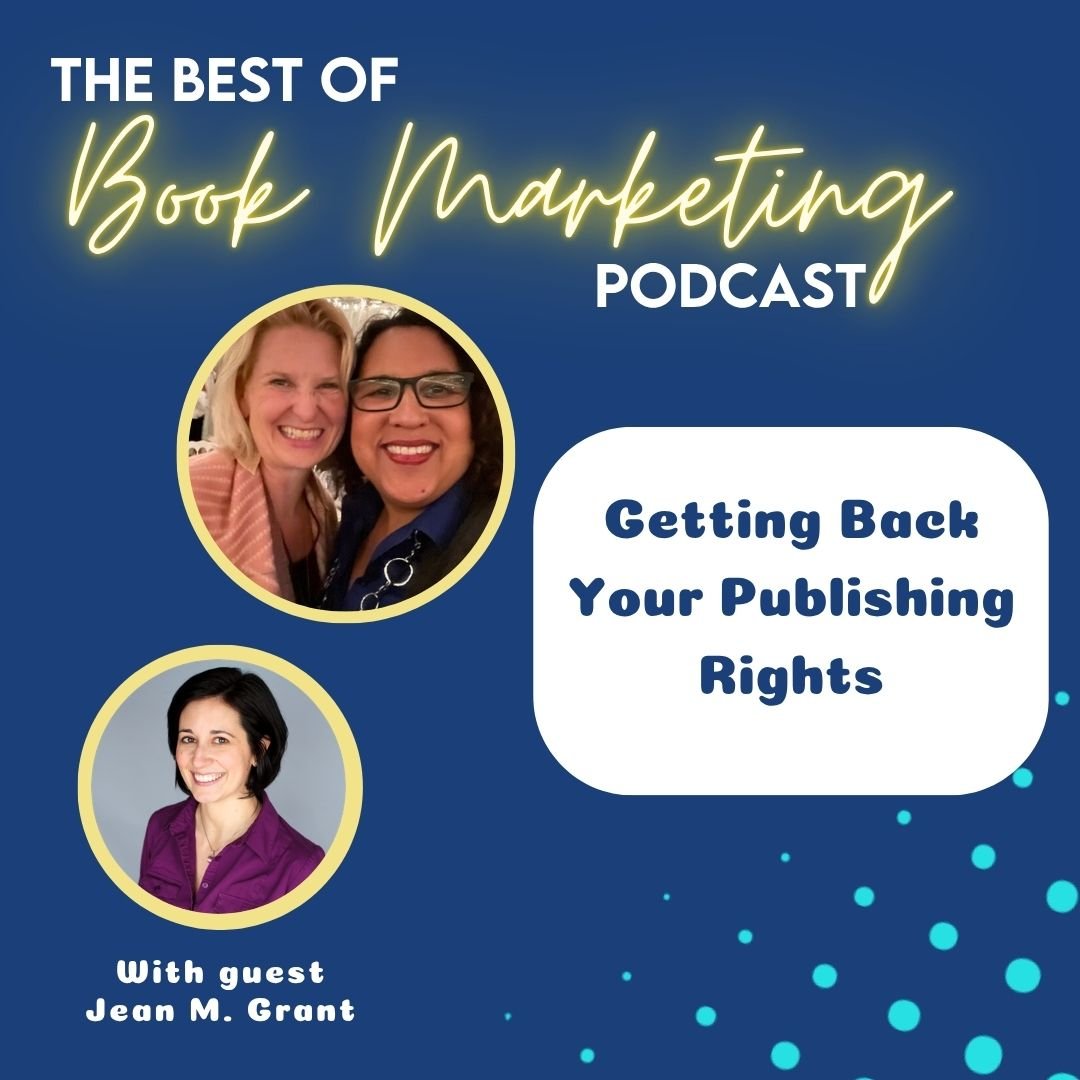


Author journeys take many turns, and a huge one is when you get your rights back from your publisher.
In this episode of The Best of Book Marketing Podcast, we are joined by Jean M Grant to discuss what to do after getting your publishing rights back. Where to start, what it means for marketing, and whether it's worth the rights reversion effort (Hint, it probably is!).
About Jean Grant
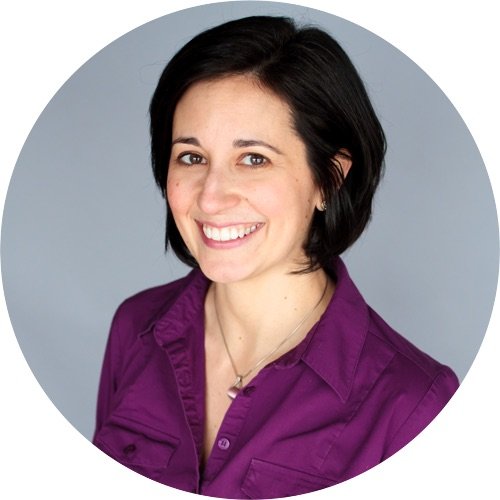
Jean M. Grant is a former scientist who writes sweeping adventures with heart and hope.
Her award-winning books span historical and contemporary romance, fantasy, women’s fiction, suspense, and friendship fiction. She has also written for family-oriented travel magazines.
Connect with Jean:
When not writing, you can find her in her gardens or exploring the outdoors with her family. She sits on her town’s Library Board of Trustees and is a strong advocate for neurodiversity awareness.
Resources
Jean’s Author Toolbox- with her Google doc on rights reversion (How to Self-Publish a Re-Released Book)
Check out Jean's novels!
Life Gets Lifey Merch!
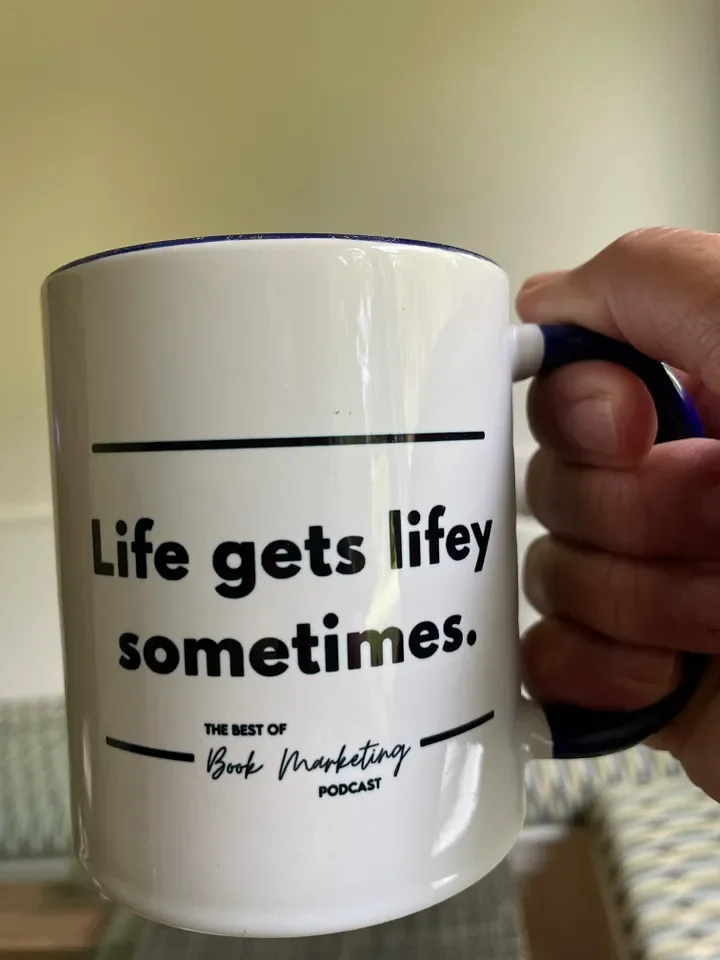
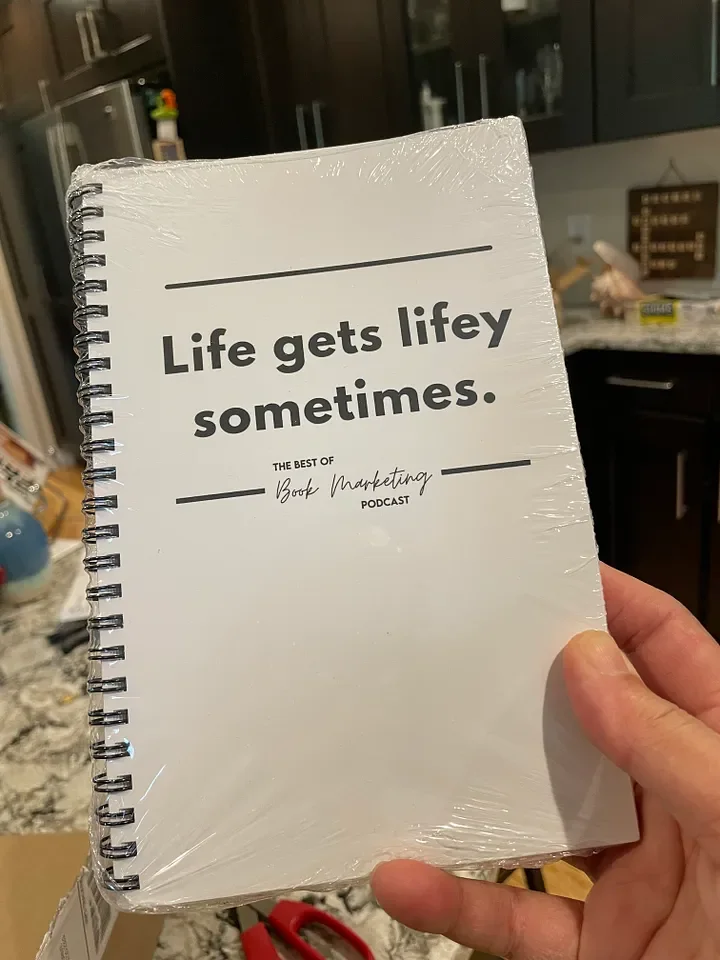
If you enjoy our show and appreciate the amazing author advice, please consider supporting us by enjoying our merch!
You know our catch phrase is Life Gets Lifey, and we all know it does! Proceeds help us keep the show free for everyone to enjoy! High-quality stuff with international shipping! 💓
Books Mentioned
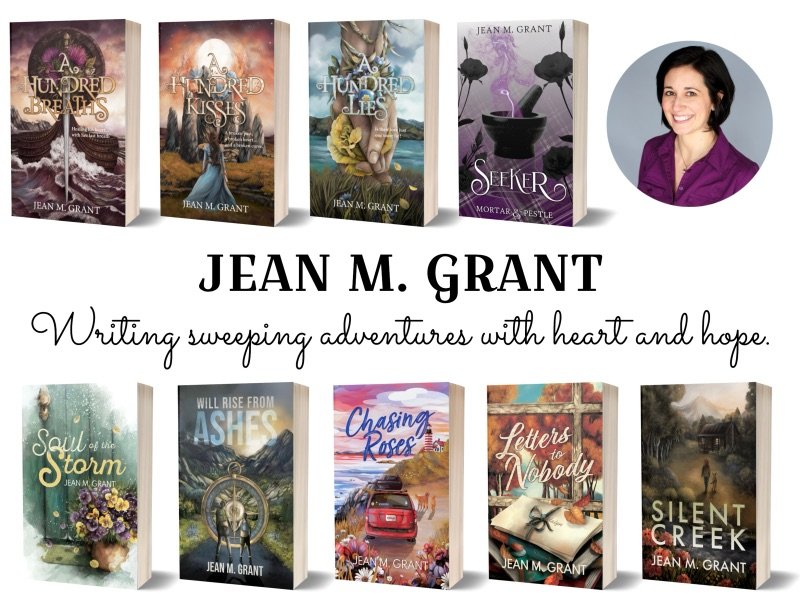
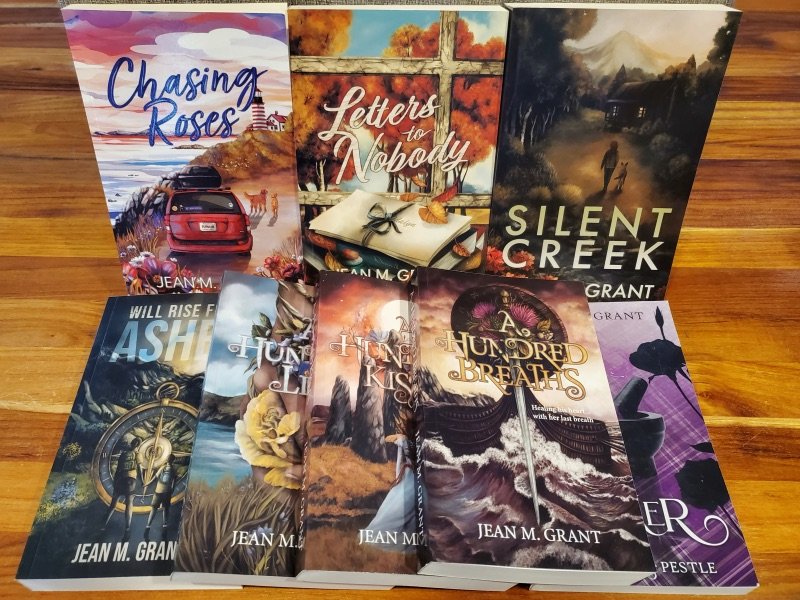
Full Disclosure: We are part of the Amazon affiliate program, which means Lainey earns a tiny commission (maybe enough for a coffee) if you buy something after clicking through from a link on this website.
Note: next sections are mostly created by AI for your convenience - so please forgive any typos or inaccuracies!
Transcript
Paulette Stout 0:03
Hello everyone, and welcome to the latest episode of the Best of Book Marketing podcast. I am Paulette Stout, and Lainey Cameron is on board and ready, and we are ready to talk to you about a really interesting topic that we've been seeing a lot more about in the author chats, which is when you have a book and you get your rights back from your publisher, like, how do you go about the whole marketing situation? And we're going to be joined in a little bit by author Jean M Grant, and she's fabulous.
Paulette Stout 0:35
She'll be she's a author friend, and she's got lots of experience in this area, and we thought she'd be the best person to come on and talk to us about it, but before we welcome her in, we're going to do our personal updates. Do you want to go first? Lainey, actually, you go first? Paulette, okay, I'll go first. So I'm on. I've redrafted the outline of the new book I'm working on, and I'm really excited. I've started working on it again. I feel like it's sassy. I feel like it's on genre. And I'm feeling excited about the new book, which is kind of good, because I felt like I've been like on the fits and starts a little bit with the drafting. That's always a little discouraging. So super excited about that.
Paulette Stout 1:14
Not having an outline really set me back. You know, I was trying to do a little bit different and do the whole pantsing, discovery, writing, whatever you want to call it, and it just didn't work for me. So that's just another aspect we're always talking about. You know, read stuff, try it yourself, and see what works for you. And that's just another aspect of learning yourself. I've got a big push going for some April events. I'm leaving. Got a couple days I'll be speaking at the Liberty state fiction writer. Super excited. The conference is sold out, but the Book Fair is free and open to the public. So if you're near Robbinsville, New Jersey this Saturday, April 11, you can pop over and say hi there, and I'll be at Book calm the following week. Then I have another event the week of April 26 or three weeks in a row, not something I normally do with my full time job. And we'll see if my body holds up, because I've been still on the recovery wagon from my back situation. So we'll see if I can make it to that third event. If my body holds up, I'm not sure. Well, Lainey,
Lainey Cameron 2:18
I can relate. I can relate anything else? Otherwise, I'll go,
Paulette Stout 2:23
No, that's, that's, those are kind of like my, my big my big things right
Lainey Cameron 2:27
now, big ones. No, these fairs, these book fairs. I'm actually going to do a book fair in Alexandria. Women's Fiction Writers Association has their retreat in Alexandria the last week in April, also the week of my birthday. So should be kind of fun. Get to celebrate with some writer friends. And on the Saturday, we have a book fair, which is open to the public with a whole bunch of women's fiction writers, which I think is going to be a blast. We'll be doing readings. We'll be talk like, talking about our books. There's like, at least, Gosh, 15 writers. There maybe more. It's going to be a really fun one. I'm really looking forward to that.
Lainey Cameron 2:59
And I will be there with my first novel, The Exit Strategy, which is the novel that I republished in September. So I've just been through this process that we're talking about has a copy, um, I've just been through this process. And so this is actually really fun one, and Jean, oh my goodness, Jean helped me so much. Jean was my guardian angel here. Every time I got stuck, I would check Jean's document and she's the best because she's made it available to all of you as well. The link is on the episode page, tons of detail, pages and pages of detail. So my big news is that I made it to the last scene after five years of my second book, and I am in final revisions for this version, like the little itty, nitty bitty stuff, like using heart and throat and and filter words and that kind of stuff, just truly the polish. At the end, I have done something really fun, which is, I'm using Claude to help me not to rewrite, necessarily.
Lainey Cameron 3:51
But you know how you do, like, search and replace on like, 100 different words. You've got the filter words, you've got the weasel words for me, you've got, like, heart, throat, stomach. Well, I gave Claude all of those and said, like, is there a more efficient way to do this? And Claude created like a tool where I can upload a scene and it'll highlight in different colors all the different things that I want to look at. And so one scene at a time, I can kind of look at the things that I would normally have to search on one at a time. So it's making it much more efficient, but it's still like real brain work, and I feel like my brain is exploding at this point. For my guests arrive, and I truly feel like my brain is going to explode. So if I if I don't make sense at any point, let me know. But I think those are the big things for me, and partly why I'm trying to get done is because I have some exciting weeks coming up. First, I've got my cousin visiting for a week from the UK. Then I'm going to Alexandria, and then I'm going to Costa Rica for 11 days. So very much. Like you pull it, I've got kind of a three week period where I'm not going to touch this book, but I'm going to do a lot of things. So yeah, yeah,
Paulette Stout 4:50
I forget our birthdays the same week. Lainey, oh, my God, we should do that. Yes, and do not use Do you ever use Pro Writing Aid.
Lainey Cameron 4:59
Yeah, I do. But this is better because there are certain things that I do that I want it to flag my unique quirks, that I need to look for certain words I overuse that pro writing aid doesn't consider one of their things. So it's kind of nice to me. Yeah, I'm actually using both. I'm doing back and forth between this tool and pro writing aid. So I'm doing all the spelling and and diction and everything in pro writing aid, but I'm using this to find the things that I normally have to search by hand.
Paulette Stout 5:27
Yeah, that's a good thing. Cool. So exciting time. Excited to be writing and marketing at the same time.
Lainey Cameron 5:35
So shall we get into republishing a novel or a book of any type? But, yeah, we do this absolutely. Okay. Let's introduce Jean. Jean say hi, hello. Okay, so Jean M Grant, like I said, has been my guardian angel, but when Jean is not being my guardian angel, she's a former scientist who writes sweeping adventures with heart and hope. Her books are fabulous and they're award winning, and they span historical fiction and contemporary romance, fantasy, women's fiction, suspense and friendship fiction. So she's written across genres. She's also written for travel magazines. And when you're not, when you're not writing Jean, I love your bio says you can, we can find you in your garden, which I know is true, because you're always sharing gardening tips and exploring the outdoors with your family, and I love how interested you are in Scotland, and all your Scotland blog posts of all of her books take place in Scotland, so it's always one of my favorite things. But Jean, not only writes, writes fabulous fiction, not only has become really savvy on this topic of how to republish your novel, but went out of her way to help other authors. And we celebrate anyone who does that, who take takes time to help other authors. And let me just tell you that in the Episode Notes, you will see that there is a document that Jean has shared on her website that has pages and pages of detail on exactly how she did various parts of this. So please don't go check that out. It's really valuable. So Jean, welcome.
Jean M Grant 6:56
I'm happy to be here, although it's very wintry out behind me still. I can't get in the garden yet, but I'm growing things in my kitchen.
Lainey Cameron 7:07
Definitely counts.
Paulette Stout 7:09
So we're gonna get going. You might notice in this episode, folks, I'll be talking a little bit more as the interviewer, just because I have never done this before, and these two fine ladies have so I'm excited to hear what they both have to say. And so if you hear me talking a little more in that context, that's why. So we can just get the conversation started of what does getting your rights back even mean, and what's involved, and what should authors expect? We'll start with Jean.
Jean M Grant 7:38
Okay, so what, what it means, like, some people don't even understand what it means. My one friend, she's like, Oh, so it's like, Taylor Swift, who got her rights back from her, from her music music producer. I'm like, Yeah, kind of like that. So, so when you're with a publisher, you have a contract, and your contract lasts so many years. So with my publisher, they were, I think, five year contracts. So when five years comes, you have the opportunity to just roll it over and keep staying with the publisher, or you can get your rights back, meaning that they're going to give them back to you. So that's what getting your rights backs means.
Lainey Cameron 8:19
And there are other ways that people get their rights back. The opposite of getting your rights back is when you sign a contract that is in perpetuity. That is often the case if you go with a large publisher, that literally means what it says forever. But even then, there are some clauses, if you have a smart agent, that if they don't do certain things after a certain time, for example, if your book is considered out of print, and that has to be defined in the contract. What it means for a book to be out of print. But if it's out of print, that you get your rights back again from that, even if it's a big publisher or unfortunately, some people have had to sue their publishers to get their rights back for breach of contract, right. If the publisher commits to do a certain number of things for you contractually, and then they don't do the things they said, then it has happened that sometimes the Author's Guild will help with this, if you have to basically go after your publisher to get your rights back. And then the other thing that happens is, if you had a good contract, not always the case, and your publisher was out of business, you might get your rights back. So those are different ways that it can happen.
Lainey Cameron 9:17
Be very careful in the contractual one for that last one, because authors have gotten stuck where a publisher goes out of business, but you still don't own your rights because the contract never said that you got them back when it went out of business, and just because they're in bankruptcy, actually your rights are something that are it can get sold as part of that bankruptcy, and so you don't automatically get them back if your publisher goes under so very careful on your contracts around that something you want to pay attention to, but those are a few different ways that you can get your rights back, and it might not be for all formats, either, right. So sometimes you had a contract with a publisher for print and for ebooks, but maybe you always had your audio book rights or your film rights or your foreign rights. There are married many different types of rights around. Books or your gaming rights. So it's often not as simple as I have them, where I don't have them, there's all kinds of formats, and Your contract should specify which formats your publisher owns and which which ones you own or someone else.
Jean M Grant 10:11
And it's important to note that so, so with mine, it was really a simple process. It was requesting them, you put in a formal email, and then the email actually serves as you getting your rights back. And I had copyright also on all of my books, like so the publisher didn't have the copyright. I already filed copyright so that, I mean, like the words are owned by me, but now I have the actual book. So I got the ebooks, the paperbacks, and in one case, I actually had to get an audio book reverted to me too, because the rest of the audiobooks I already owned.
Paulette Stout 10:45
So I just want to just clarify one thing, because for those folks who are pre published, when you write a book and you publish with a publisher, the whole act of publishing means you're basically giving them the book they own it, lock, stock and barrel. It is theirs to do with it, what they will contractually speaking, obviously. So we're talking about rights. It's talking about, you know, when you write the book, yes, you wrote the words, but the publisher owns the rights. They the intellectual property is theirs until it comes back to you. So we're process. You have surrendered that right when you publish it, because you're going to get better. To get benefits from working with a publisher at the end of the contractual term like we've just been talking about, you'd be getting that the intellectual property back under your own ownership. So just to clarify that a little bit,
Lainey Cameron 11:35
yeah, any other thoughts on that? The right to exploit it is really what you're talking about, right? So the right to publish it in a certain format and to make money from it, that's the right we're talking about, yep.
Lainey Cameron 11:49
So there's a question here, Lainey, I thought you wanted to ask, I'm not sure if you've already covered those topics, about the different scenarios?
Lainey Cameron 12:05
Yeah, I think we covered what are the different scenarios where you might get your rights back? Unfortunately, some of them do involve suing your publisher, and hopefully no one's going through that. But there are scenarios like Jean and I went through where your contract actually gives you the right, gives you the possibility to get your rights back after a certain period of time. And she and I both went, we're with the same publisher. It was a five year period, and that's a nice, clean way. I will tell you that don't assume that the publisher will do it as the contract says. So, for example, the publisher I was with, the contract says you have to give us 30 days notice before you get to the end of the five years, and then you'll get your rights back so many days after the five years. Effectively, what happened is, the day I gave them the notice, they said, Here's your rights today. So suddenly, my book was down off Amazon, like, instantly,
Jean M Grant 12:41
Yeah and so, so yeah, and that's unusual, so that's part of the, like, the steps of, like, getting prepared for it, because so when you are ready to ask, yeah, they are ready to, like, give it to you and start taking it down. So there's definitely some things you need to do beforehand, before you ask, and some will wait to give them to you. My, yeah, my publisher gave me all my books right away, like I got them right away, and within days, they were coming down. One took a long time to come down from Apple, so I had to follow up with them on that. I'm like, why is my book still on Apple? And it's six months later? So yeah, yeah, there are some steps.
Lainey Cameron 13:14
Can we just? Can we just go there saying, as you brought it up, Jane, so let's say I have a contract that I'm going to get my rights back, and it's going to be, you know, in six months from now. What are the things I need to do now before I get to that time period?
Jean M Grant 13:30
Okay, so I and I remember telling Lainey this, the first thing you want to do is grab your a s i n number on Amazon. You have your ISBN number, or you should, it's associated with your book, right? So make sure you have your ISBN for your ebook, your paperback, your audio, all that get your ASI, N, A, S, I n number, because once it comes down from Amazon, that number disappears. So that's something that you want to get. I also made note, you mean, do you mean, write it down. Write it. Write it down. Yeah, take note of write it down. I have, I like big files, so just take note of it. Write it down in a file, and know what the number is that's associated with your with your books,
Lainey Cameron 14:14
you should have a reason again. You're gonna need it later. You're gonna need it later after your book comes back out. So don't ask your publisher lose that number, because it got taken down the same day, and now you need it six months later, a month later, when you're republishing the book. So what I did is I, based on Gene's advice, went to all the pages my book showed up on, and I printed the PDF so that I had a copy of all those pages. So I just did print and saved it as a PDF for my Amazon page, for my eBook, page for my paperback, page for my every publisher, that every venue that I knew my book was on, whether it was audiobooks or print or ebook, I went and printed to PDF those pages so that I had all of that, including all the descriptions.
Jean M Grant 14:53
And it's important to make note of the date that it was published, because when I published mine, I published them at. As a second edition. But it also asks when I'm uploading my files, what the first edition was, what the date was. So I make note, because I have like, nine books, so you have to make remember what day you published. It exactly like, you know, April 16, 2019, so you want to write all this information down. You want your blurbs. You want to keep all of that information. Hopefully your publisher will give you some files back. In my case, they didn't give me anything, but I like to save things so I have my I had my EPUB, I had my PDF, and I was able to convert them into a Word file that I could use for republishing. So you want to have your book?
Paulette Stout 15:38
Yeah, then that's the next question, because I wanted to ask about that, because I've heard of people, when the they submit their manuscript, there's still some editing that sometimes happens after it's submitted to the publisher. So the file you have in your own files may not be the actual final file. So is that what you had gene the final files? Or did you have to ask for those.
Jean M Grant 16:01
So I actually had them. So I had galleys, which were those, what you're talking about, some of the later editing, but I have the ePub file, and I had a PDF, and the PDF was the final, and if I couldn't figure out how to convert that into a Word document, I would have just retyped my whole manuscript from the PDF, if I had to. Right.
Paulette Stout 16:20
I have software, free software. You can show you how to use a calendar,
Jean M Grant 16:25
and I have a printed book, but I was able to convert it. So I yeah, if you have a PDF, you can convert that.
Lainey Cameron 16:33
That's what I want to get in on this. I had to, yeah, can you hear me? Okay, yeah, yeah. I had to take same thing. I had to take the PDF and convert it, to pull the text out, to put it into Word, to then put it into a formatting software to republish it. So, yeah, I had to pull it out of the PDF as well.
Jean M Grant 16:54
And so other things you could do in the meantime is you create a plan. I have that 20 page document that I got that plan by talking I talked to Paulette, I talked to other people who have been self published, and I put all their information together. So gathering information from other authors, and then also you can create your accounts while you're waiting at other places like Barnes and Noble and whatnot. So you already have, you should have probably an Amazon Author Central page that doesn't go away. You still have that. But I started setting up all my accounts and where I wanted to distribute and that you don't need to have a book yet to do. You could just start setting it up because it has tax information. It takes a while to get everything validated,
Lainey Cameron 17:35
And this is under the assumption that when you get back your rights, you're probably going to self publish that same book, right, as opposed to sell it to a second publisher. That's the most likely scenario. I imagine some people maybe go find a second publisher for it. But both Jean and I, what we're talking about here, when we say, go set up your Amazon account, etc, is under the assumption that you're going to then publish that book yourself, right, as a new edition of the same book.
Paulette Stout 18:00
Yeah. So I'm curious for both of you, when you got your rights back, was that a point where you actually looked at the draft and did some re editing, or is it really at a point of I am repackaging what exists to get it back out into the world, and this not at a point in time where I'm really going to be making any changes to the to the manuscript itself, whoever wants to take that?
Jean M Grant 18:27
So, yeah, I'll go first, because I've done it well, let me see how many times. 125, books, four books. 1234- five books. I've done it with five books, yes. And so each book got edited again. I did not outsource the editing. I did not get a new another proofreader, because it had gone through a lot of editing at the publisher. But I did polish the books. For one of them, I added an Epilog, but for the most part, the book stayed the same. I edited less than 20% which is that magical number with copyright that if you keep it under 20% you don't need to file a new copyright, but it was like wordsmithing, prettying up, you know, doing the things that I wanted to do that they didn't want me to do, but the core stories for me stayed the same, even if they were elements that I was like I did for my publisher.
Jean M Grant 19:14
And I was like, Ah, I could change it now, but I kept it the same, because also all those books had audio books, and that was the other reason why I didn't do that big of a change, because I wanted them to be as close to the audiobooks as possible. And so I wasn't taking down the audiobooks, although there is one I am going to take down, but that one is a specific one, because it was a series book. So that one actually required removing something from the title because it was a proprietary series by the publisher, so I had to take out the name of the series. The audiobook is going to come down because it has the names in it. So all throughout the book, I had to change a few things as far as naming, and I also lost my reviews on that one, so that.
Lainey Cameron 19:59
It's into topic. Yeah, that's what people want to know, is if I get my rights back and I republish my book, do I lose all my reviews? We're going to talk about that in detail. Let me answer your question, Paulette, on how it changed, because I pull up a book and actually look at it, so change definitely, definitely less than 20% but I did update the praise page at the beginning, I added the Book Awards, which I didn't have when it first published. So I added a page with the book awards that it had won. I changed the formatting, updated the copyright, and then I added some back matter that was not there in the original. I added a Do you want to learn more? And here's to get more information from the author page, which my publisher didn't originally let us do, right? They wanted things to go to the publisher. I might have slightly updated the author's note, my bio at the back, and a tiny, tiny, tiny bit on the acknowledgements.
Lainey Cameron 20:52
And then I did do a sweep through for like, typos and things that hadn't been caught the first time around. And I did find a few. And also, as you lay it out again, like using vellum. It's going to wrap in different places. So you need to make sure, like I changed the size, it's a bigger sized book than it was before, so the pages wrap in different places, et cetera. So not big changes. And I really wanted to make sure that, as it went from this one, the old one, which was the cover for the publisher, to this one, see slightly different sizes, I really wanted to make sure, as it changed, that it would be a new edition of the same book, because that's what lets you keep your reviews the metadata. If it's the same and it's a new edition of the same book, from Amazon's perspective, that's when you're going to have the opportunity to roll over your reviews from one to the other. If you bring it out as a whole different book with, for example, a different title, that's a big thing. If you change the title, you're done, you're not going to be able to combine the reviews in that scenario. I believe. Tell me if I'm wrong, Jean?
Paulette Stout 21:50
Nope
Jean M Grant 21:50
Yeah, I think you're correct, because, and I did the same. I updated the back matter, the front matter, you're kind of like, Hey, I could do whatever I want now, right? You know, I can do it the way I wanted to do it, and you can also, I did not do it, but you can change your blurbs. You can change your back cover blurb. You could change your blurbs on all the websites too. But yes, as far as neat, changing the name so my one book, I had to remove the subtitle.
Jean M Grant 22:54
The title stayed the same, but the subtitle was the series. So by getting rid of the subtitle, which, when my publisher put it up, was part of the name, that changed the metadata so I could not carry over my reviews, not on Amazon, on other sites. It did carry over Barnes and Noble it carried over and Goodreads keeps everything forever. Just know that.
Paulette Stout 23:26
Now, one thing to keep in mind, too, just for folks that are listening, is that there, you know, when you publish a book, there are certain things you can't change, the title, the subtitle, the ISBN, like those things can't change. So in a rare occasion, Amazon, if you open a ticket, they'll let you change your subtitle, but you should. But the subtitle on the ebooks are more flexible and can change. You shouldn't be swapping those out a lot. So those there might be a hack. I'm not sure you let me know if it's if you have, yes, if you keep, if you keep the reviews on the ebook, and you swap out the other one and then connect them, I wonder.
Lainey Cameron 24:09
I did this flat so, so what I recommend is, when you put it, let's say you get your rights from your publisher, you've saved that PDF with all the information from your Amazon page, right? So it's got the title, the subtitle, the asin number, etc, which is the Amazon unique identifier for the book. You've got all of that. Put the meta bit data back up, exactly the same. And when I say exactly the same, I mean the title with the spaces and the dashes, exactly the same and the same for the subtitle. Now you might not have control, which is what Jean was saying, like, if your publisher owns something, but in her case, it was a series name that the publisher owned, so she had to take it off the book. But let's assume for a second that you have control, that you can go with the exact same title the book had. What I did is I put it back up on Amazon with the same title, with no subtitle, because the original book had no subtitle, with the same metadata, to the extent I could the. Same date from the original, etc. And then after it was I went and changed the subtitle on the ebook. So I was able to do that after it was out, after the reviews had been combined. So basically, you write, we're going to go through this. But after the after I'd written to Amazon and the reviews were combined on the two editions and they were showing up, then I changed the subtitle.
Paulette Stout 25:36
So one of the big fun things that you can do when you're republishing is redo the cover art. So I'd love to know from each of you kind of what was your thinking and approach to the new covers for the titles you had did first, did any keep the cover from the original publisher? And if not, how did you approach developing new cover art? We can start with Eugene.
Jean M Grant 26:05
Okay, so you can, I think my publisher allowed you to purchase the cover art if you wanted to keep it. But I was like, Heck, no, they were okay, but they they have control over the cover art, and it wasn't exactly what I wanted, right? I had a vision for my covers, and it wasn't what they did. They were okay for the time, right? So I definitely want a new cover art. And so I did some research on a variety of cover artists. I found somebody that she was just phenomenal. She does everything by hand, so she's an artist, not a cover designer. I guess there's a difference between design and art. And I was able to show her what I had and told her what I wanted. I was able to make my trilogy, my series, very cohesive, because with my other with the original ones, the font wasn't cohesive between them. So I was able to do a lot with the cover art, and you can spend as little or as much as you want with redoing your cover, but I think most, most people get a new cover,
Lainey Cameron 27:06
Mostly unless you negotiate to buy it from them, your publisher, your original publisher, owns your cover. So that's their intellectual property, not yours. And so unless they offer it to you or you buy it from them, you have to start with an assumption that you can't use it, and then if you can negotiate for it or buy it or whatever, maybe you can, more often than not, people take advantage of it as an opportunity to put a new cover on the book. Like for me, I didn't feel like the original cover. We talked about this in the cover episode with demanza. I didn't feel like the original cover captured the tone of the book. And five years later, I'd learned a lot about how readers were reacting to it, what people liked. And so I had a lot to work with in terms of doing a much better cover that fit the things that people liked in the book, so that it would really be a fit with the tone and that the right people would read it. And so I definitely saw that as an opportunity the original cover like like Jean says, you often don't have control with a small publisher or a big publisher, right? Like, you don't generally have control of your cover. So it's a great opportunity to do it the right way now that you can,
Paulette Stout 28:14
One thing I want to mention is that depending on when you publish your first book, you know, it could be a few years, and cover trends change. So that's another aspect to consider of whether you want to make the effort to change your cover. Is how long has it been, and is your cover? You know, the cover design still on trend for what's publishing in your book's genre? Go ahead. Gene, sorry,
Jean M Grant 28:41
I was just going to say, as far as IP goes, that you do have to take your cover art down everywhere that you have it. So if you have it on your websites or wherever, like Goodreads keeps covers forever. So if you go and look at like Stephen King, who he's he's got like 20 versions of the same book with lots of covers. So, but if it's in your control, you need to take it down.
Lainey Cameron 29:03
Good point. That's a really great point, which is another reason that your website should be you, the author, not the book. Make this mistake with their debut novels. They make their website be named after the book and look exactly like the book, and now you don't have that cover art anymore on your website looks everything on your website looks exactly like your book.
Paulette Stout 29:23
Yeah. So now we so we started talking a little bit about, you know, republishing the books. But how did you decide which publisher, which retailers you wanted to use, and if you wanted to do KU versus y? What were some of the considerations to help you make that decision? Jean?
Jean M Grant 29:40
And I think Lainey and I think we went a little bit different with our choices on that, yeah, so, um, so with the I decided I wanted to go wide. I didn't want to have full Amazon control. I do have one book that was my first self published book. It wasn't a republish book that is in Amazon. It's in KU. So it's my KU baby, um. Um, but I decided I wanted to go wide. And then I had to determine, who do I want to do the paperbacks, right? How do I want to do the paperbacks versus? How do I want to do the ebooks? Who do I want to distribute? So I did come up with a plan, and I went wide with that.
Paulette Stout 30:18
So with why? Just tell us exactly what you mean by why. Like, who are you distributing through?
Jean M Grant 30:23
Okay, yeah, so wide for me is I have the paperback is in Amazon and through Ingram sparks, and then the ebook is through Amazon. I did not do the ebook through Ingram sparks because I used draft to digital, which also does Apple smash words, lots of other like libraries and stores. I did, Kobo, Kobo plus google. And am I forgetting one? Did I say Barnes and Noble? Barnes and Noble is the other one that I did? Yeah.
Lainey Cameron 31:00
Great. And I went, I decided to go wide with the paperback and the audiobook. So the audiobook is not Amazon only. It's also through in audio to all the other audio platforms. And the paperback is through Ingram in addition to being through Amazon. So it's out in all the major distributors, through through Ingram. But with the ebook, because Amazon sells such a high percentage of ebooks in the US, I decided to try it in Kindle Unlimited, and because my category of women's fiction has a decent percent of that category, that is people reading Kindle Unlimited, and it's a 90 day commitment. So I reckon I'll put it on Kindle Unlimited, and I'll see how this book does there. After 90 days, I can choose whether to continue or to what, whether to go white with it. So for me, it was a 90 day decision, not a forever decision. I will say that those 90 days have passed and I'm still in Kindle Unlimited right now, right now. I'm inclined to stay there. I'm getting as much as many royalties from Kindle Unlimited as I am from sales of the ebook, which is kind of interesting. So that seems to be saying that that was worthwhile for me might change my mind in the future, but I like the paperback to be available broadly. The eBook, the audiobook is available in all the audio channels, but the ebook is only through Amazon right now.
Jean M Grant 32:14
And every strategy, I mean you, that's a that's a good strategy, and you can change it easily, without any problem. I think what happens is the paperbacks, right? People run into problems with how to do the if they're only with Amazon with a paperback, and then they want to go wide, you can run into some issues. But with the ebook, it's pretty easy to go wide. Go to just Amazon, and there are some other distributors popping up there too, and then people also sell things direct on their website. So there's a lot of things to think about, but you're not locked into anything forever.
Paulette Stout 33:05
When did you start talking about the fact that you were getting your rights changed, you were kind of relaunching the books. And how did you talk about that publicly, that you talked about starting early, with some of the setup well in advance. But when did you start actually, kind of start talking about it and more publicly in marketing, a little bit about the book coming.
Jean M Grant 33:23
So I started to do teasers on some social media, usually mostly to friends on Facebook. But then I started putting things in my newsletter letting people know that I was, like, giving my books a facelift, getting my rights back, and talking about it in a positive way, and like, I'm going to get a new cover art, but it's the same story, so I kind of just started to sprinkle it in to both social media and my newsletters and letting people know what was happening and what's coming up, because it was a slower release. You know, I didn't do them all at one time.
Lainey Cameron 33:58
And I did very similar I talked about it in my newsletter. I started talking about in my social media. I didn't do like, a huge, big shebang, but it was kind of like with excitement, right, with joy and why it's good. And I took people inside the process of getting a new cover and why it was changing and why this is a good thing. I will say that what I started doing or trying out was Amazon ads, because that's not something that I could do when I didn't have control of now that I'm self published, that's something that I can do. And it was interesting to be able to play around more with my keywords, with my Amazon ads, etc. So that was something that put some energy into a triangle with kind of the first quarter that the book was out that I hadn't done in the past when it was with a publisher.
Jean M Grant 34:41
Oh, I will say I did. I got my my newsletter, folks and my social media followers involved with renaming because of the series I got it. I had to get rid of the town name and the BNB that was the place in the book. So I whatever it's called, The LODs, the hotel. So I. Actually put out feelers for names, and I put out a questionnaire to all of my followers to help me name the town and name the inn. So they had a fun time with that.
Paulette Stout 35:20
Jean, what did you rename the inn to, Lainey was asking.
Jean M Grant 35:24
Oh my gosh, the end. He forgetting, and I just put this book out. Oh, okay, hold on. I'll get back to you. No, it's totally fine. There's a little bit of a surprise question. Oh, I know the mill. I think it was millstone in is what I decided on. I've done so many books lately, millstone Inn and then the town, oh my goodness, it had a better name to it, and I'm already forgetting the name of the town. Don't worry about it.
Paulette Stout 35:58
I had a quick question for both of you, how much when you were talking about in the pre launch, because obviously, writes back is a very kind of inside publishing type of a concept. So did was that something that you kind of didn't really talk about too, too much? Because, you know, I'm just, I'm just curious how much the actual trans, the IP transition played into some of your messaging, or if it was more just like, Hi, we're getting, like you said, getting a facelift, new cover, or whatever, whoever can take that one.
Jean M Grant 36:30
I kept it simple, and then it's the same kind of Spiel I do. I do a lot of in person events where I sell books and people ask, Oh, who's your publisher? Or with the publisher, and I have to explain, oh, you know, I was with this publisher, and then I got my rights back, and now I did them myself, and here they are, and I'm self published. And so, like, I kind of keep it really simple, and I make it very positive, because that's what it is. You have more control now, right?
Lainey Cameron 36:56
I think I describe it as taking back control. So I say, like, for five years I was with a publisher, and after five years I had, I had an option to take back control of my book, and I did. And so people understand that, right, if you control it, get to decide what to do with it.
Paulette Stout 37:08
Yeah, I like that. That's a really nice way to position it. So, so now that you've got your books back, has there been a clear economic difference between working with a small publisher versus what's happening now, self published. Lainey, you want to go first on that one?
Lainey Cameron 37:27
Sure. Yeah, totally. I see like the cost of my paperbacks, if I order them through Amazon, is like a third of what I used to have to pay per paperback from my publisher. So that gives me a lot more flexibility. If I want to be at events, if I want to do a discounted paperback. I think my paperbacks now are like $5 and they were like over $10 closer to 15 before, and that was my price, right. Never mind the price for selling to the end user, at the end reader at so that's a huge difference. But also just the the economics on the ebook are so different, because with a publisher, your royalty rate is maybe 20 25% on an ebook, if you've got a good contract, I would say.
Lainey Cameron 38:06
And now I'm making 60% on the ebook with Amazon. So the ability to do things like advertising, right, because it's so much better, because it can maybe pay for itself in a more in a scenario where you're only making 20% of the price, it's getting very hard to make certain things pay for themselves, and so I'm definitely seeing that it's it makes more sense to invest in certain things, because the economics are so much better, both on the paperback and the ebook. And I didn't realize I would see such a huge difference between the Ingram royalty and the Amazon royalty on the paperback. So like with Amazon, I think I'm making, like, $4.50 a copy. I'm selling it for like, $15 $16 and I'm making $4 $55, a copy in the US with Ingram, I'm making 45 cents on the same book at the same price. That's quite a dramatic difference. That economics, you know, those economics are really interesting and were not visible to me before, you know, because I was getting maybe a 50% royalty on the ebook, and so it was so much difference in terms of those economics, and it makes me want to invest in my own work more, because I can see a path to making those economics make sense, versus when I was with a publisher where my slither of the revenue was so small that it was going to be hard to make most things pay off. And that's probably just a statement about self publishing or indie publishing in general, but it became very obvious to me, coming from a publisher to indie publishing with the same book.
Jean M Grant 39:28
How was your experience Jean, the same?
Jean M Grant 39:33
Like the profit is a lot, a lot, lot, lot better. I do notice when you go through Ingram, it's like pennies on the dollar. You don't get a lot through Ingram because they're distributing but with Amazon, the ebook and the paperback, you're you're doing really well with the percentage that you get on those books. And with since I went direct, with a lot of other places like direct, with Barnes and Noble, Google, Kobo. It's a lot better. And then you can buy author copies. It's also cheaper to buy author copies, buying author copies of your paperback. So that's buying your books from your publisher. They give you, like, a 30% discount, but then it's like, really heavy shipping. So by the time you buy these books from your publisher to sell in person, you really aren't making a lot on them, but when you can buy the author copies through Ingram or through Amazon or through other printers, because there are other printer options out there, you're making a lot more so when you when you do in person and sell those books and yeah, and even through draft a digital who is a middleman right in between and distributing to other places, you still do well, so it's great economically.
Lainey Cameron 40:46
As an example, on the paperback cost, because I live in Mexico, I would forever be asked by people, can you get some of your books here into the bookshops here in San Miguel? But because the cost of the paperback was so high from the publisher, and then I would have to pay for shipping in the US to get it somewhere, and then I would have to pay for shipping done from the US to Mexico. I would be losing money on every copy that I sold outside the US, like every copy of the paperback copy that I sold in Mexico. But now you can get my book in Aurora books. You can get it in the library bookstore here in San Miguel. I'm so excited there's a books book club reading it locally. So these are all things that weren't available to me, before.
Paulette Stout 41:21
That's fantastic. That's fantastic. So we're going to pause for a moment for our sponsor segment, and we do something a little different this time, is that we're going to talk about us. We're going to talk about our merch and how you can potentially support the podcast. We this is a labor of love for Lainey, mostly Lainey, honestly. And you know, there are, we don't make money this enterprise, but there are costs involved in staging this show. So one thing we did that we thought was kind of fun is we did open a merch shop. We opened a few months ago. We have our life get lifey merch, and there's, like, shirts and T shirts and notepads. I love my notepad. I use it every day. There's socks, there's water bottles, there's all kinds of things. So if you're interested in supporting the show, if you like water bottles and tote bags and T shirts and socks, if you feel like life gets lifey sometimes is a phrase you connect with and that you know, maybe want to buy as a gift for someone. We really encourage you to visit our store. I'd be fixed like fourth wall, I believe. And we'll put the we'll put the links in the show notes, but please consider supporting the show and getting some merch.
Lainey Cameron 42:38
Yeah, they make great gifts. They're really cute. So I want more things. Every time I go to the store, I'm like, Oh, this stuff is so cute. More more. I want the shirt. I don't have the shirt yet.
Jean M Grant 42:47
I want the mug. I'm gonna buy the mug.
Paulette Stout 42:52
I love this notebook. Like, this is like a notebook. It just says life. It gets like you sometimes, and it's got these little dots, I don't know. I use it all the time. And I think I'm gonna get the note I use this. So yeah.
Lainey Cameron 43:04
What writer doesn't love notebooks?
Jean M Grant 43:07
And I I bring a lot of notebooks with me to all these I do, like 30 or 40 events per year, so I bring a notebook to write things down into.
Paulette Stout 43:15
So yes, so we welcome folks to explore our merch
Lainey Cameron 43:24
of and we'll put the link wherever you're watching this.
Paulette Stout 43:27
Yes, we will. We will share the link. So Lainey, want to kick us off our next question,.
Lainey Cameron 43:33
Yeah, can we talk about reviews? Because this is the big burning topic, right? That everybody wants to know about is, oh, my goodness, I got my rights back. I'm going to republish my book. Do I lose all my reviews because I've got a new edition of the book? And the answer is no, not necessarily, but you have to do it right? So Jean, you want to take this one and talk us through. How do we make sure, if we can, that we keep those reviews that we worked so hard to get on the book?
Jean M Grant 44:00
Okay? So Well, first of all, to get your reviews. First of all, Goodreads keeps all your reviews. Goodreads is great. It's a library. It keeps everything, but you also have to be careful, like it keeps everything so you don't have to worry about that with BookBub, it's really easy to link up your you can update your book cover, update your book links, and they just carry over all your reviews for that too. So book bug, BookBub and Goodreads are great. Amazon is and then I actually looked Barnes and Noble keeps them too. So that was good as well.
Jean M Grant 44:32
And Amazon so when you are getting your reviews, you want your reviews linked. I use certain verbiage, and I got that from other authors. Again, I did a lot of research of how to word it, how to approach them. And you do it through Author Central. You don't do it through KDP, you don't do it through the publishing. You actually do it through the Amazon Author Central, your author page. And pretty much, you have you have your asin, and you have your ISB. You have all your numbers, right? You have all those numbers, and you give it to them, and you ask them you wait until your books are up. So if you have an ebook and a paperback, you want to make sure they're both up and they're linked. If you have an audio book, you want to also make sure that's linked in there too. I do have my audio books through audible, so I wanted to make sure all three got linked together. So I did have to bring audible into the fold with making sure everything was linked together. And then at that point, if you have that, you send this letter while the email, and you cross your fingers and they say yes every time, except when the metadata is different. So and I have the verbiage of how I do it in my Google doc there.
Lainey Cameron 45:42
Which we'll also put the link for how to get that on Jean's website in the show notes wherever you're watching this. Um, yeah, so that's the key. Is you basically, this is not the language. Look at the language in Gene's document, but you basically, you write to Amazon support and you say, this as a n and this as a n are the same book. Can you please link these two? And that's why you need the numbers, because without the numbers, you can't send that email. So this this number and this number are the same book, just a new edition of the same book. Can you please link these and you make a very, very simple email with the numbers, and you know this one and this one. And so that's why you need those numbers, because otherwise it's going to be hard to ask them to be linked. And the old number has disappeared at this point because your publisher took it down. And so that's the key. Is, save your ASN, save your ISBN. I recommend go to all your pages and print them to PDF, so you have a copy of the full page of everything with all the information, and then try to make your metadata the same, including the subtitle when you're first putting it back up.
Jean M Grant 46:39
Yeah. And, you know? And one thing I did do, because I was worried about losing the reviews, which I did lose, is I went to Amazon and I looked at everybody who reviewed that book. I only had, like, 50 or 60 on that one, and I anybody I knew personally, friends, readers, authors. I reached out to them after the book came out, and I was like, do you and I saved their reviews. I was like, here's your review. Do you mind republishing your review for this book? And I had like, a dozen people, I think Paulette, you were one of them. I was one of them. Yes, that was for sure. Yeah. So that's a backup plan. Yeah, if you only have a few 100, you know, copy them into a word.
Lainey Cameron 47:17
Exactly, same thing, save them all. I mean, I did the same thing. I went page by page and I saved them all to PDF, so I had all of the pages of reviews so that I had them later if I needed them, in case they disappeared. But I have seen people have pretty good success when the title is the same, the subtitle is the same, the author is the same, those all have to be the same, and the book is substantially the same. And you say that it is a new edition, right? You're saying that it is a second edition of the same book when all of those things are true. I've seen people have very good success with Jean's approach of emailing support with the letter she recommends and getting the reviews to carry over. It's when any of those differ from each other that you get into trouble.
Lainey Cameron 47:54
And that's what Jean's saying. Like she had one where the subtitle was different because the publisher owned the subtitle, and so she couldn't do anything about that, right? In that scenario, she couldn't use the subtitle that didn't belong to her, that wasn't her intellectual property, so the subtitle had to change, and Amazon went, nope. Then we're not combining them. It's not the same thing anymore, just a pain in the ass. So, yeah, you want all of those things to stay the same from book to book, so don't be going like, Oh, I wish my title had the in the middle of it, because it because it would have been so much better. But don't do that.
Jean M Grant 48:24
Don't do it. And you know what there? There is, you know, it's, it's not the end of the world. Because that gets into, like, the marketing of these new books, is that I actually am running a review campaign for that book so I can get more reviews on that book. And that's going really well.
Lainey Cameron 48:41
So what are you doing? Gene How are you running? What are you doing for your review campaign?
Jean M Grant 48:45
So I am using itsy bitsy book bits reviews, and then I also use Susie approved for books to grammars and reviews. That way, I found both of them very like good I've gotten a good turnout, a good number of reviews, and so that's been really helpful. So I've done that with with a lot of my books.
Paulette Stout 49:07
Yeah, I love it. That's like dependable bank of all. It's really a great, great service. So gene, you've got multiple titles here. We're talking about you mentioned it earlier that you rolled them out over time. So tell us a little bit about your rollout strategy. You know, when you had multiple books in the same series, did you rapid release really quickly? Did you roll them out over a period? What was your thinking and what do you think works best for you?
Jean M Grant 49:34
So, so I had one stand, well, two standalones and one that was a trilogy, and it was kind of based on my cover artist and her timeline, how fast she could do it. And I thought she was going to be slower than she was. I rolled one book out every three to four months, but and so the individual I just did the most recent one in January, and the first one started, oh my gosh, I don't that. Oh yeah, it was a year. Ago, it was my brain. I had put three new books out since then, too, but for the trilogy, my fear, my strategy was the put out the first one and then once the second one came out. A few months later, I put up a pre order for the third one. At the same time, I was able to get a BookBub feature deal for the first book. So I was able to get buy through, and I was able to get pre orders on the second book and the third book. So if you have a series, yeah, I do suggest kind of rolling them out, not too far apart, but not too close, so that you can actually bank on either getting a deal on the first book on, you know, 99 cent were free. Mine was a book bug free, and then they buy through the second they pre order the third. So that was really good. That worked.
Lainey Cameron 50:48
Well, that's great. And don't, don't lose the opportunity now that you own your back matter to cross promote your books, right? Like that's something that you don't have control over. To the great extent. With a publisher, they often want to put other books from other authors at the back of your book. So that's gone, right? Because now you choose what to put in your book. And so yeah, you've got this unique opportunity to update the back matter to really try and drive sell through. Right? Maybe you put a chapter of the next book of the next in the series at the back, for example, if it wasn't there before. Or maybe you put a pre order link for the one that's not here, and then you update it once it is here. And so you've got so much more control now to do those kind of things.
Jean M Grant 51:26
Yeah, I did that too, yeah. And, and then I made a box set. You know, I have a box set. I have a spin off book from another series. So there's a lot that you can do, because your books are already written, so you already know what's coming. So you could do a lot more with the back matter, the front matter, the links, the pre orders, everything.
Lainey Cameron 51:43
And then the other thing I did, I did with the marketing was I had saved all the reviews pages, so I had literally printed them, like to PDF files, and I uploaded all of those into Claude, and asked Claude, like, what do people like about this book, and what should I lead with when I'm marketing it going forwards, because I have this trove of information and intelligence that I didn't have when it was launching, right? I was guessing at why people would like my book and who would like my book. Well, now I have all this information from all these reviews that I can use to say, Okay, this is what people really like. Let's lead with that.
Paulette Stout 52:14
I love that idea. That's a fantastic idea. So we talked about this with this a little bit. We were talking about the distribution piece, but I'm curious about the pricing, because I've heard all kinds of things about folks, you know, that are the published through publishers, and you know some of the restrictions about, you know, what we're able to sell the books for. So how did getting the rights back impact how you were pricing your titles, Jean?
Paulette Stout 52:40
Yeah, so for me, I think they're actually a little lower because my publisher kept increasing the price. I think my eBooks were maybe 5.99 and 6.99 I reduced them to 4.99 my books are like 350 to 400 pages long, so they are longer books. I was able to pick the paperback price I wanted. And I noticed with my publisher, they kept increasing the price, you know, as it's just costs have gone up. So I'm happy that it I didn't have to go too high. My books are 1899 I was able to box my trilogy as an ebook, and it's a three book set at 999. I lowered my I went one book that's a novella, so I was able to lower that price too. Like, and you have control. You can change your prices anytime you want, and same with in person events, right? I offer sales and bundles and whatever. You have the control to do the prices and just do your research on what, what people are spending, right? You know, like, you know, what's a good price point? People talk that 99 is not good, or 199 is not good. Well, then do some research into that and see, yeah.
Paulette Stout 53:48
Lainey, what are your thoughts on the whole pricing piece?
Lainey Cameron 53:51
Yeah, look at look at people in your category, right?
Lainey Cameron 54:04
Oh, I was just saying Jean on the pricing that you want to look at people in your category and look at self published books, not only big publisher books. We talked about this in a recent episode that sometimes big publishers want to make the ebook not so attractive, so people will buy the paperback for supporting bookstores that's the primary channel. And so like, look at your category. And if the big publishers are putting putting an e book out for $14 and self published books are $5 do the $5 for goodness sakes. So yeah, you want to really look within your category at the right books, not assume, because the top three books in the category are $15 for the ebook, that that's what you should do, right? Like, yeah, that's
Jean M Grant 54:42
Yeah, I think isn't the reason for them pricing these ebooks so high as they're drawn. They want you to buy the paperback. I think that's why.
Paulette Stout 54:50
Yes, they don't even, don't even try to hide the fact that that's what they do, yeah? So, um. So we're starting to run out of time, so I'm going to skip a question, but I'm just curious, what are some tips that you both can give for authors getting their rights back, and what are some mistakes to avoid? Jene you want to start ?
Jean M Grant 55:14
So I wrote a few down right tips. One is be be professional and cordial with the publisher. Don't burn bridges, you know, you know. And I've always had a good relationship with mine. So I think, be polite, be professional. Don't, don't burn a bridge. Because you just, you never know. And let's be nice in this industry, because everybody, it's a small industry, even though there's a lot of us, when picking the book size that for me, that's a mistake. I went with a smaller book size because I wanted my books to be the same size that my publisher had them. And I kind of wish that they were bigger. I went with a five by eight instead of now, my new favorite is five and a half by eight and a half. So all my new books are that way. So really kind of think about the size, what you want to do with it, especially size is something you can't change. You can, but then you have to get a new ISBN and all that stuff. So think about that. Another tip is, yeah, you have the front and the back matter that's at your disposal so you have full control. Yeah, those are my tips.
Paulette Stout 56:20
Lainey, anything come to mind for you?
Lainey Cameron 56:21
Yeah, I think those are great Jean and we've obviously talked about the save all your information on your ISBN, that's a key one, or your ASINs and your ISBNs. But I think I would say, don't hesitate to learn from what's happened with your book over the time that it's been out. Right? It's really unique that you have this situation where you know more, right? You know more because you have reviews, because you've talked to people, because people have shared on Instagram, you've met people in person, and they've told you why they did or didn't like your book. Like, all of that is such good insight that you can use now that you are kind of relaunching this book, right? You're putting it out there in a new format, new cover, etc. And so, like, there's a reason that my cover looks really different, because I saw that that the original cover didn't capture the tone that people liked in the book, and so I wanted to try and capture the things that people did like about it with a cover that much more matched that. So it's kind of a unique opportunity.
Lainey Cameron 57:13
And then also think ahead to your future books. Right? As I was redoing the cover on this, I was really thinking about, okay, so how is this going to work? And is what's the one after that going to look like? Even if it's not a series, you might want your body of work to look consistent like it's part of a family, right? You want people to read one and then read the next one, even if they're standalone novels. And so I think that's a unique opportunity you now have, especially if you're working from different publishers, and even a publisher will have two books that don't look anything like each other for the same author. I don't quite understand why they do this, but they do and so you have that opportunity to create this kind of more consistent body of work that someone can look at, like, jeans on a table at an event, right? And go like, Oh, wow, that looks so professional. They look like a family, even though they're different genres and different types and different series.
Jean M Grant 58:02
Yeah, people ask me. They're like, Oh, are these all serious? I'm like, No, we have a lot of standalones here. So it must be cohesive, because they think that all the books are part of one series. And I'm like, No, this is the series. These are all the no, they're standalones. Ah, so I must give the it must be the tone. It's very cohesive. It's the same artist too. So I use for all of them.
Paulette Stout 58:28
So Lainey, did you want to tackle that IP question? I'm not sure if you had done any research wanted to share, or if we could move on to the next question.
Lainey Cameron 58:35
This was just a little question that someone had around, what if you only get one format back. So what if you get back the ebook, but your publisher still has the paperback, for example. And I think the main thing you get into there is, you know, trying to navigate this thing with the reviews and is it a new edition of the same book with all the same information? Might be a little trickier if you don't own all the versions of it, right? So if you own the audiobook, but you don't own the paperback or the ebook, or vice versa. You own the ebook but you don't own the paperback. It just might get a little trickier in terms of trying to keep those records together and get the reviews to carry over. So just something to consider if you have the option to take, you know, one part, but not the rest. Maybe you should take it all if you have that choice.
Paulette Stout 59:19
Yeah, one thing that just popped to mind that I know that I remember hearing a podcast years ago, actually, and it was something about going back to the rights reversion question of, yes, you've got the time limit on your contracts, but sometimes there are contracts that have sales triggers. I think so. If your book isn't selling at a certain level, then you can potentially get your rights back within a different time period, maybe sooner or so forth. So that is something to keep in mind when you're looking if that's something you're interested in, you know, see, if you're eligible, they may not release you. You know, they have the they have the right to keep it, but if you're not meeting specific sales targets that were mentioned in. The contract through, you might be able to get your rights back sooner. Just that did just pop to mind. So I did want to mention, okay, so, like we're wrapping up, but overall, really curious gene, what has the process taught you? Has it made you more likely or less likely to want to work with a publisher again, or is it just the same
Jean M Grant 1:00:19
Ah, I have done with publishers, I think, no, I was, I was such a nervous Nelly. I felt like there was this bad connotation with being self published. And so I talked to so many indie authors, and they have changed my opinion. And you can do it, you know, like, and I feel like I learned a lot with my publisher. It was great. I had a great relationship with my editor. I learned so much from them, and that gave me the power to go and do it on my own. And so I feel like if I can do it, anybody can do it,
Lainey Cameron 1:00:53
100% 100% with Jean, especially if you've got Jean's document to help you, and jeans coaching and advice. Thank you, Jean. Yeah, I feel like it seems so much scarier than it is, right? And actually it's a really nice ease into self publishing, because you're not trying to, like, edit, revise, etc, the book. You're just trying to package this thing that already exists. And so you can focus on that packaging part, you know, the the description, the cover, like these. These are things that matter, that you now can put some focus on and do better than first Cameron, and just see the publisher experience as an amazing learning experience, which is what it was for me, right? I was very happy I knew what I was getting into, and I knew that after five years I'd have this choice. And the only thing I would say I got slightly wrong is I literally realized the day before the 30 days before five years, that I had to give notice, like 30 days out, and so I scrambled and sent the email like the last day it could have been sent. So maybe check your contract a little farther in advance. Don't assume that if it's a five year contract, that you can look at it after five years. You might have to look at it a four years, or four years and six months in order to give notice to get your rights at five years.
Jean M Grant 1:02:08
And it's and it's usually when your contract was written, not when your book was published. And then so, like, I'm still waiting to get rights back on an audio book from Audible, and so I'm trying to keep an eye on when I actually need to, like, request it, because I have one more book to go to get from them to take down. But I will say that my publisher was very good about giving me all three books in my trilogy, even though one was not due with its contract for like, another year and a half. Oh, nice. Yeah. They figured, you know, Why hold on to the third book if we're giving you the first two, so you can have all three. So they were very generous with that.
Paulette Stout 1:02:45
Oh, it's really interesting.
Lainey Cameron 1:02:47
And like, I guess I would say, also, I had a gap. So, like, this thing happened where the minute I asked for my rights, the publisher took it down. So thank goodness Jean had told me to save everything in the universe. But like, then it took me two months before I got at least two months before I got another cover, before I redid the blurb, before I put it back up. That book wasn't out there on Amazon for two months. And you know what? The world did not fall apart. My author career did not fall apart like I did it, right? I didn't just rush it because I was panicked that it was now down off of Amazon. And so I feel like, you know, sometimes you make these into like a bigger deal than they are. So the book wasn't there. Nobody even noticed. Most people didn't even notice that my book was gone for two months.
Jean M Grant 1:03:28
And I still had audiobooks up. So I still had something up, but I had to take down their covers. So I put placeholder covers up in the meantime, which is what I did, just to keep the audiobook still live, but art down, yeah, so you can do a placeholder.
Paulette Stout 1:03:46
That's great. That's a cool thing. So cool. So I think we are at our end of our time, Jean, you've been amazing, and this information is so fantastic. Hopefully lots of authors in this boat will learn a lot, and we'll, you know, we'll link over to your information. How can people get in touch with you if they want to learn more or find out about what you've got going on Jean?
Jean M Grant 1:04:11
Well, the best is my website, which I watched your lovely podcast about Web. Oh, no, I Oh, I've been sourcing that. Calm is my Wi Fi. I don't know what is wrong. It is the best room in my house with the wife. Just say it again, really quick. What's your web address? Yeah, it's Jean M grant.com, everything is there?
Paulette Stout 1:04:42
Cool. Thank you so much. Jean Lainey, as always amazing, and we will see you next time. I believe it's a solo episode with Lainey and I, and I believe we're talking about book formatting. Don't hold us do it. But I think we will be talking about all everything funness with book formatting, so stay tuned for next time. Thank you so much for all you're doing to make us a top 10% podcast in the world. Thank you, everybody.